

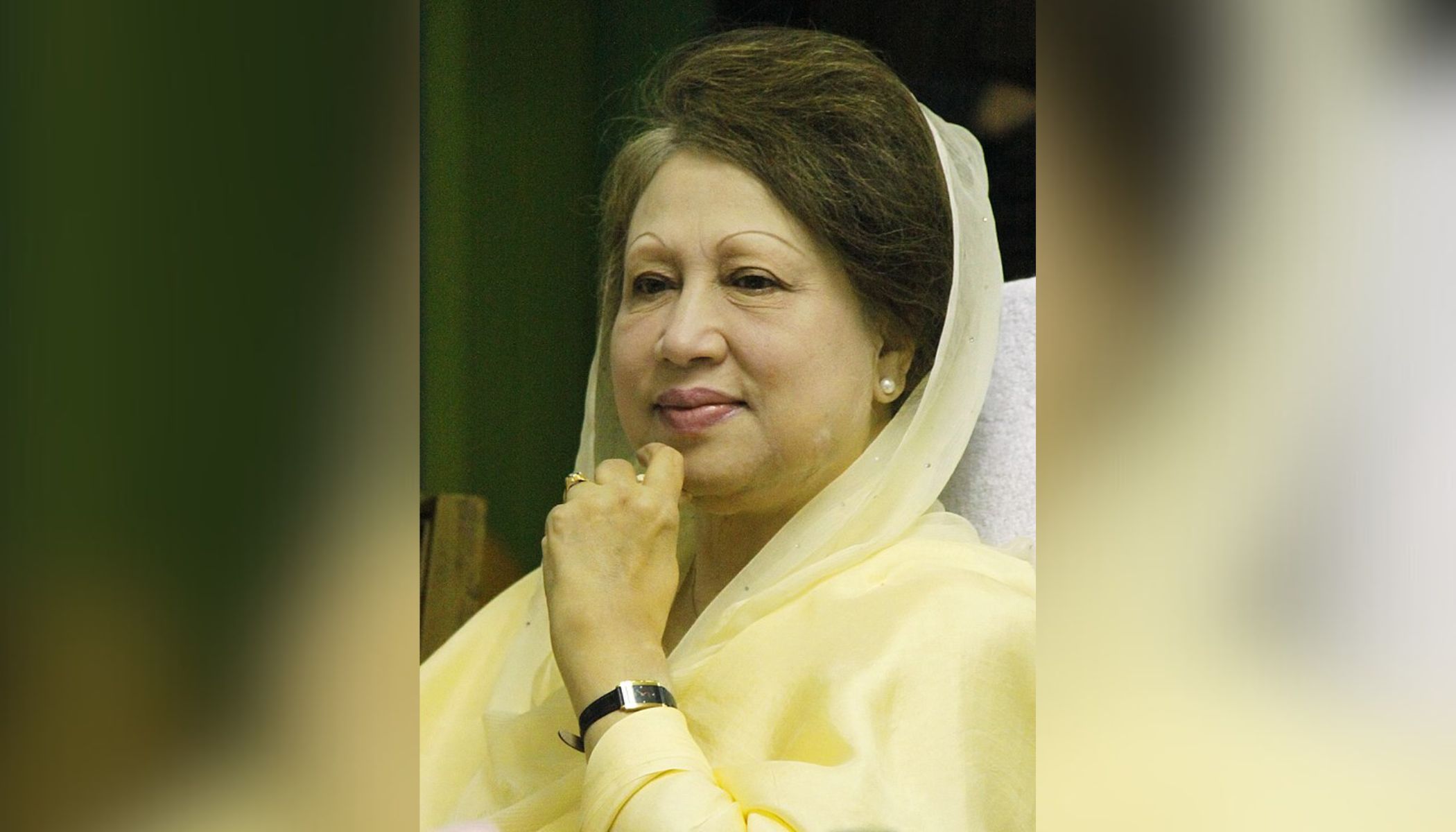
Begum Khaleda Zia, former Bangladesh prime minister and chairperson of Bangladesh Nationalist Party, in 2010 at the Diploma Engineers Institute, Dhaka. | Credit: Mohammed Tawsif Salam, CC BY-SA 3.0, via Wikimedia Commons
Dec 30, 2025 / 19:22 pm (CNA).
Catholic leaders in Bangladesh are mourning the death of Begum Khaleda Zia, an alumna of Catholic-run St. Joseph’s School who became the country’s first woman prime minister and maintained a lifelong bond with the Catholic community. She died Tuesday morning local time at age 80 at Evercare Hospital in Dhaka following a prolonged illness.
“She knew us and we had a good relationship with her,” said Bishop Gervas Rozario, vice president of the Catholic Bishops’ Conference of Bangladesh. “She protected minorities when she was in power.”
The Bangladesh Nationalist Party (BNP), which she led for decades, announced her passing. “Amma (Mother) is no more,” acting chairman Tarique Rahman told senior leaders. The interim government, led by Chief Adviser Muhammad Yunus, declared a three-day state of mourning and a public holiday for her funeral, to be held Wednesday at the National Parliament grounds.
From ‘putul’ to prime minister
Khaleda Zia’s journey began in the classrooms of Catholic-run schools. Born in 1945 in Jalpaiguri, she spent her formative years at St. Joseph’s School in Dinajpur, where she was affectionately nicknamed “putul” (doll) by her principal, Sister Pia Fernandes.
Father Albert Rozario recalled a memory from her time as the president’s wife. When taking her son for an admission test at St. Joseph’s School in Dhaka, she waited outside the gate until the principal, realizing who she was, invited her inside.
Politics was not her chosen path. It was thrust upon her by tragedy following the 1981 assassination of her husband, President Ziaur Rahman. As the BNP reeled from the loss of its founder, party leaders turned to the grieving widow to unite them and carry forward his legacy.
She rose to the challenge, becoming BNP chairperson in 1984. The woman once nicknamed “doll” as a girl led the movement against the military dictatorship of Hussain Muhammad Ershad, earning a reputation as an “uncompromising leader.”
Her perseverance paid off with an electoral victory in 1991, making her the first woman prime minister of Bangladesh.
Supporter of Christians
Her tenure was defined by reforms. She restored the parliamentary system and instituted the caretaker government model to oversee elections — a system meant to ensure fairness. She introduced free education for girls up to grade 10 and stipend programs for rural female students, boosting enrollment and literacy.
“She played a significant role in increasing access to education, expanding opportunities for women and girls and strengthening basic social services,” Bishop Rozario noted.
Her political life included three terms (1991–1996, a brief period in 1996, and 2001–2006) and intense rivalry. She endured imprisonment on corruption charges in 2018, release in 2020, and was finally acquitted in 2025 after a legal battle. Through it all, she remained a central figure in the nation’s consciousness.
For the Christian community, she was an ally. Father Albert Rozario, who celebrated Christmas with her three times, remembered her inclusive spirit. “She used to say, ‘Christmas is not only for Christians, it is for people of all religions.’” That she died during the Christmas season has added a layer of resonance for many.
Her passing has drawn condolences from across South Asia. Indian Prime Minister Narendra Modi noted her “important contributions … to India-Bangladesh relations.” Indian External Affairs Minister S. Jaishankar is traveling to Dhaka to pay his last respects alongside dignitaries from Pakistan, Bhutan, and the Maldives.
In a televised address, Chief Adviser Yunus captured the national sentiment: “Today, our entire nation stands still in deep grief and sorrow… With her death, the nation has lost a great guardian.”