
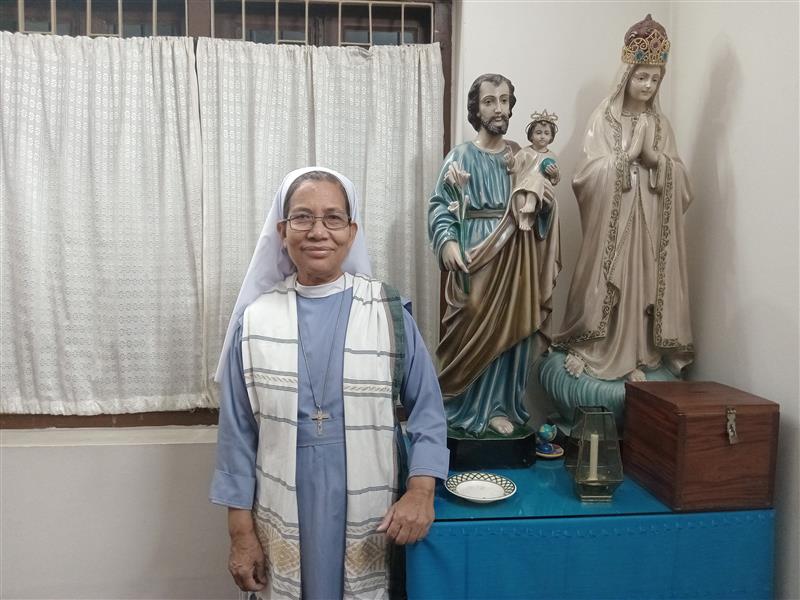
CHATTOGRAM, Bangladesh — In Bangladesh’s bustling port city of Chattogram, where thousands of internal and international migrants struggle daily for survival, a 67-year-old Catholic sister has become their strongest defender.
Sister Zita Rema of the Salesian Sisters of Mary Immaculate is known across the city as the “Mother of Migrants,” a title she has earned through decades of tireless service to the poor, the displaced, and the forgotten.
Born in the Diocese of Mymensingh, Sister Zita now leads the Migrant Desk of the Archdiocese of Chattogram. The local Catholic community includes about 3,000 faithful, among them migrant workers and expatriates from India, Sri Lanka, the Philippines, Nigeria, Uganda, and South Korea. Alongside them live more than 5,000 internal Christian migrants working in garment factories, shipbreaking yards, bicycle workshops, oxygen plants, beauty parlors, and other sectors. Many face discrimination, unsafe labor conditions, financial insecurity, and emotional isolation. To all of them, Sister Zita offers a compassionate presence.
“Migrants carry heavy burdens,” she said. “I walk with them so that no one feels abandoned.”
Her ministry is a daily journey through crowded streets, workers’ quarters, and factory neighborhoods. She visits homes after long work shifts, prays with families, counsels the distressed, and advocates for those facing harassment or injustice. Many call her “Ma” — a sign of deep affection.
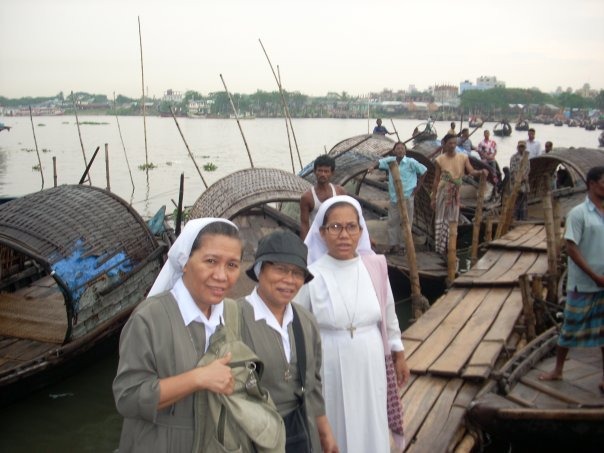
Sister Zita is often among the first to respond when tragedy strikes. On March 4, 2023, an explosion at the Seema Oxygen Plant in Sitakunda killed seven workers, including two Catholics, and injured 25 others.
“I went to the hospital immediately,” she recalled. She spent days helping secure treatment, comforting families, and negotiating compensation. Her advocacy resulted in more than 1 million taka (about $8,300) paid by the factory owner and the government. “Without Sister Zita, we would not have received justice,” said Mickey Nokrek, whose son died in the blast.
The hardships of migrants extend beyond accidents. Many families cannot afford the cost of transporting a deceased relative’s body back home. “It can cost 10,000 to 30,000 taka,” Sister Zita said. She mobilizes parish committees to raise the necessary funds so that families can bury their loved ones with dignity.
Sister Zita is also deeply involved in preventing human trafficking. She helped rescue seven Christian children taken to a madrasa in Dhaka under false promises of education and pressured to convert. She has intervened for young women in beauty parlors who were facing abuse, helping them seek legal remedies. “Every person deserves safety and dignity,” she said.
Health care is another cornerstone of Sister Zita’s mission. Many migrant women, especially those who are pregnant, seek her guidance. The Migrant Desk works with two part-time doctors who offer free consultations. She also connects patients to affordable diagnostic centers and has introduced a small insurance pool: Each member contributes 100 taka, and the fund supports anyone hospitalized.
Economic instability has made life worse for many workers. The Russia-Ukraine war has slowed operations in shipbreaking yards, reducing daily wages to 300 taka only — and only when work is available. Sister Zita regularly counsels workers and provides school materials for their children. “Without support, they lose hope,” she said.
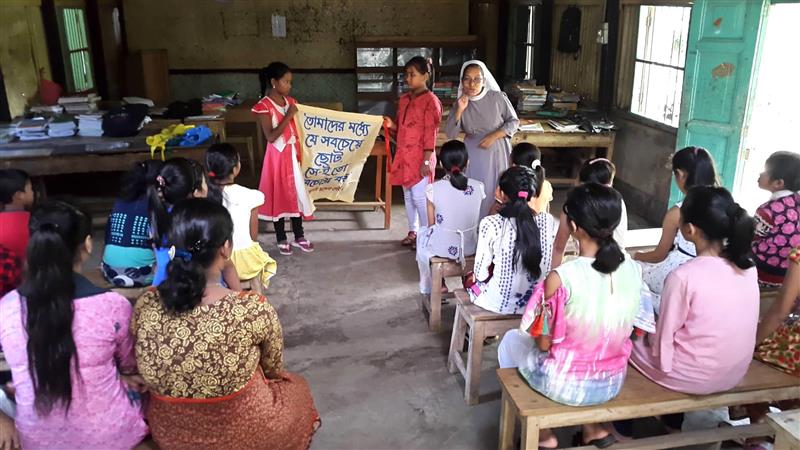
One migrant who found refuge in her mission is Papia Nokrek, a beautician who suddenly lost her housing due to rising rent. “Sister gave me shelter when I had nowhere to go,” she said. “She truly is a mother to migrants like me.”
Despite working in a Muslim-majority nation, Sister Zita said she has never faced hostility. Her cross silently communicates her Catholic identity. “My witness is through love,” she said.
Bus staff greet her respectfully as “Ma,” and she continues to teach catechism and prepare Catholics for the sacraments of reconciliation, the Eucharist, and confirmation each year.
As International Women’s Day is marked globally on March 8 with the theme “Rights. Justice. Action. For ALL Women and Girls,” Sister Zita said the struggle for safety remains urgent. “Women and children still fear leaving their homes alone,” she said. “My hope is for a Bangladesh where every woman can walk freely, without fear.” Each year, she organizes a program for migrant women to give them a platform to share their struggles and strengthen their unity.
Sister Zita’s concerns reflect the harsh realities women face in Bangladesh. According to the human rights group Ain o Salish Kendra, 749 rapes were reported from January to December 2025, including 569 single rapes and 180 gang rapes. In addition, 193 women were victims of sexual harassment. For Sister Zita, these numbers underscore the urgency of protecting women’s rights and dignity.
Looking back on her decades of service, she said she feels fulfilled. “For 20 years, I have walked with migrant workers, listened to their stories, cried with them, and prayed with them,” she said. “Their love has blessed my life. I thank God for choosing me for this mission.”