








A tense calm hangs over the predominantly Christian town of Al-Suqaylabiyah in Syria’s Hama countryside after it was attacked on Friday, March 27, by armed groups from outside the town, leaving widespread damage to public and private property.
Footage documenting the destruction — filmed by the attackers themselves or secretly recorded by residents — showed acts of vandalism and theft targeting cars, shops, cafes, and other property, accompanied by threatening chants and insults.
The assault was not an isolated incident. Local sources reported that another attempted attack was thwarted the next day by general security personnel, deepening residents’ fears that such assaults could happen again.
In immediate response, the town’s residents staged a protest sit-in, raising clear demands, most notably rejecting a “single-color army” (a force dominated by one religious or ethnic group), insisting on compensation for the damage, and calling for those responsible to be held accountable, including members of General Security, whom protesters accused of taking part in the attack.
The demonstrators also stressed their rejection of uncontrolled weapons and sectarianism, affirming that public and private freedoms are a “red line.” They voiced frustration with some media coverage that described the incident as merely an individual dispute, holding signs denouncing “false media” and refusing to give interviews to state-run outlets.
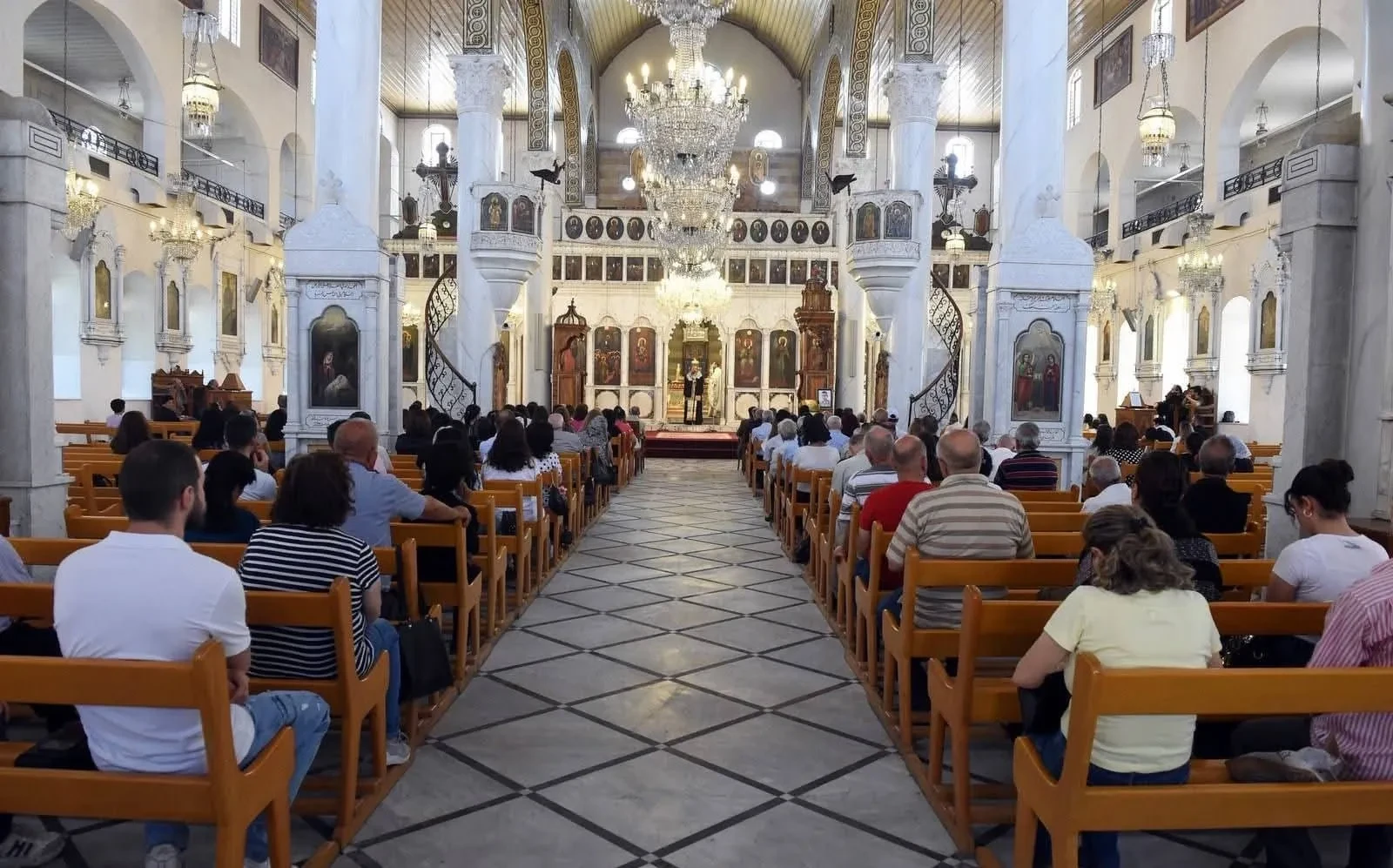
On the ecclesial level, reactions were swift and firm. The Melkite Greek Catholic Patriarchate of Antioch and All the East, together with most Churches in Syria, announced that Easter celebrations would be reduced to prayers inside churches only, citing “the current discouraging circumstances.”
At the same time, the Greek Orthodox Patriarchate of Antioch and All the East strongly condemned what happened, saying that incidents targeting the Christian community cannot be dismissed as “individual incidents” and warning against the dangers of fueling sectarian tendencies.
The patriarchate also called for an official investigation, accountability for those responsible, and compensation for those affected. It stressed that responsibility for maintaining security rests solely with the state and its institutions, along with the need to control the spread of weapons outside state authority. It further emphasized the importance of upholding citizenship and integration among all components of Syrian society, far from the logic of majority and minority.
For its part, the Greek Orthodox Archdiocese of Hama described what happened as an attack carried out by “outlaw groups,” calling for strict legal measures, including the formation of a judicial investigative committee, accountability for those involved and those who failed in their duties, enforcement of laws restricting weapons to the hands of the state, and guarantees of equality among citizens.
At the same time as the Al-Suqaylabiyah incident, a U.N. report said more than 1,700 people were killed and around 200,000 displaced during a single week of violence in the south of the country in July 2025, most of them Druze civilians. The report warned that the humanitarian situation remains fragile and documented violations that may amount to war crimes or crimes against humanity.
This story was first published by ACI MENA, the Arabic-language sister service of EWTN News. It has been translated and adapted by EWTN News English.