




LAHORE, Pakistan — Catholic groups have joined victims of one of Pakistanʼs deadliest church attacks in voicing concern over delayed compensation, even as authorities begin disbursing aid more than 12 years later in the province of Khyber Pakhtunkhwa.
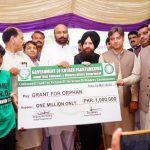
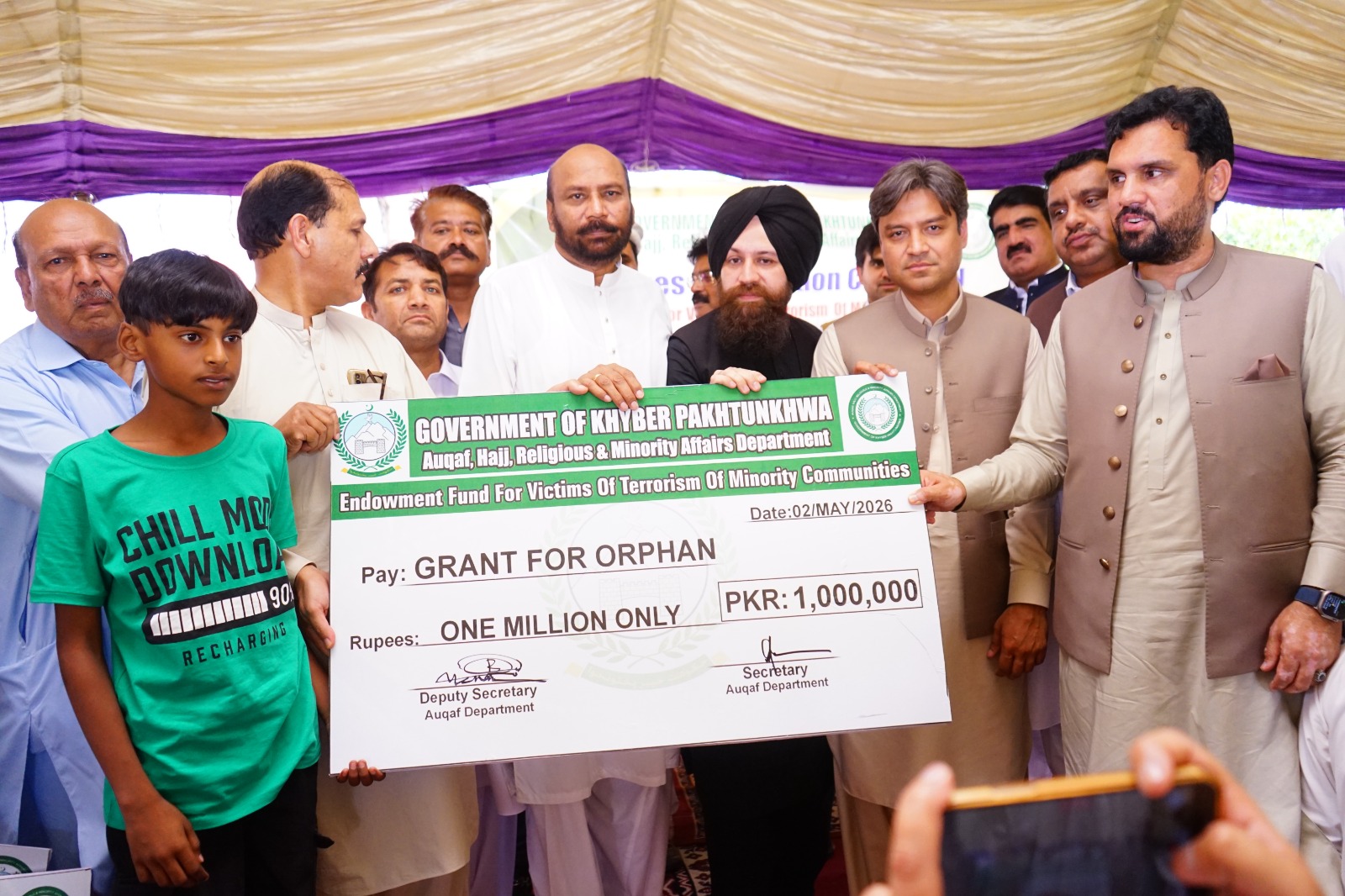
The reactions followed a May 2 ceremony by the provincial Department of Endowments, Hajj, Religious and Minority Affairs, which distributed checks to 37 victims from minority communities affected by terrorism in the province bordering Afghanistan.
The beneficiaries included 11 widows, 24 orphaned children, and two persons with disabilities, who received payments ranging from 1 million to 2 million rupees ($3,588 to $7,175).
Some recipients were linked to All Saints Church, where at least 96 people were killed and more than 150 injured in twin suicide bombings on Sept. 22, 2013.
Among them was Zubair Zafar, who lost his father in the attack claimed by a faction of the Tehreek-e-Taliban Pakistan.
Now working as an office assistant at the civil secretariat, Zafar said he plans to use the 2 million rupees to support his siblings’ education and arrange his younger sisterʼs marriage.
“I wanted to join the military, but I could not leave my family as the eldest of five children,” he said. “I started working after my grade 12 exams to support my mother, who works as a kitchen in-charge at an orphanage run by the Peshawar Diocese of the Church of Pakistan.”
He said government officials, in their speeches, promised laptops, scholarships, and profit-sharing from minority funds for widows and orphans. “Given the pace, we have little hope,” he added.
Delayed disbursements
While provincial governments in Sindh and Punjab provided compensation ranging from 200,000 to 500,000 rupees to victims soon after the attack, the Khyber Pakhtunkhwa government delayed disbursements despite court interventions and repeated appeals.
Frustration deepened after the Provincial Disaster Management Authority and the Auqaf Department converted an earlier 200 million rupee compensation package earmarked for Christian victims into a broader endowment fund for minorities, a move families say diluted targeted relief.
On April 1, Chief Minister Sohail Afridi approved increasing the fundʼs allocation from 200 million to 400 million rupees and directed authorities to expedite payments.
But survivors say the process remains opaque and slow.
Khuram Yaqoob Sahotra, who lost his right eye in the blast, returned from the distribution ceremony disheartened.
“I was told the compensation would be given before July 1. I expected the checks the same day. Now we are told to wait again for approval,” he said.
The 40-year-old father of three, a former school clerk who lost his job during the COVID-19 pandemic, still carries ball bearings lodged in his spine.
“Doctors have advised me against lifting heavy objects. I cannot sit or stand for long periods,” he said, adding that his extended family now supports him.
He continues to undergo treatment for complications related to his artificial eye. “Initially, support came from across the country, but it later dried up. Now there is no clear plan. There is no transparency,” he said.
Habib Khan, additional secretary of the Auqaf Department in Khyber Pakhtunkhwa, said at least 100 more minority victims would receive compensation this month.
“The data is being verified. Those with incomplete documents are being contacted. No one will be left out,” he said, declining to comment on the prolonged delay.
‘A mockery of justice’
Rights advocates say the payments come too late for many families.
The Cecil and Iris Chaudhry Foundation, a Catholic charity that provided vocational training to 80 orphaned girls and widowed mothers after the attack, said many victims died over the years due to inadequate medical care and financial hardship.
“More than a decade has passed, during which many injured victims lost their lives and families lost their sole breadwinners,” said Michelle Chaudhry, president of the foundation. “Disbursing funds in installments now amounts to a mockery of justice.”
She urged the government to release full compensation in a single payment “with dignity and respect.”
All Saints Church
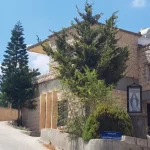
Built in 1883 inside Peshawarʼs Kohati Gate, All Saints Church is widely regarded as Pakistanʼs only church designed in a mosque-inspired architectural style, with domes, minaret-like towers, and Persian and Pashto biblical inscriptions. The Christian community rebuilt it at a cost of 4 million rupees ($14,349) without government support.
Peshawar remains on the front line of militancy in Pakistan.
In 2022, Church of Pakistan lay pastor William Siraj, 70, was shot dead and another pastor injured after Sunday prayers at Shaheedan (Martyrs)-e-All Saints Church in Peshawar.
In 2016, security forces foiled a suicide attack on a Christian neighborhood in the cityʼs Warsak area after four suicide bombers attempted to enter the colony.