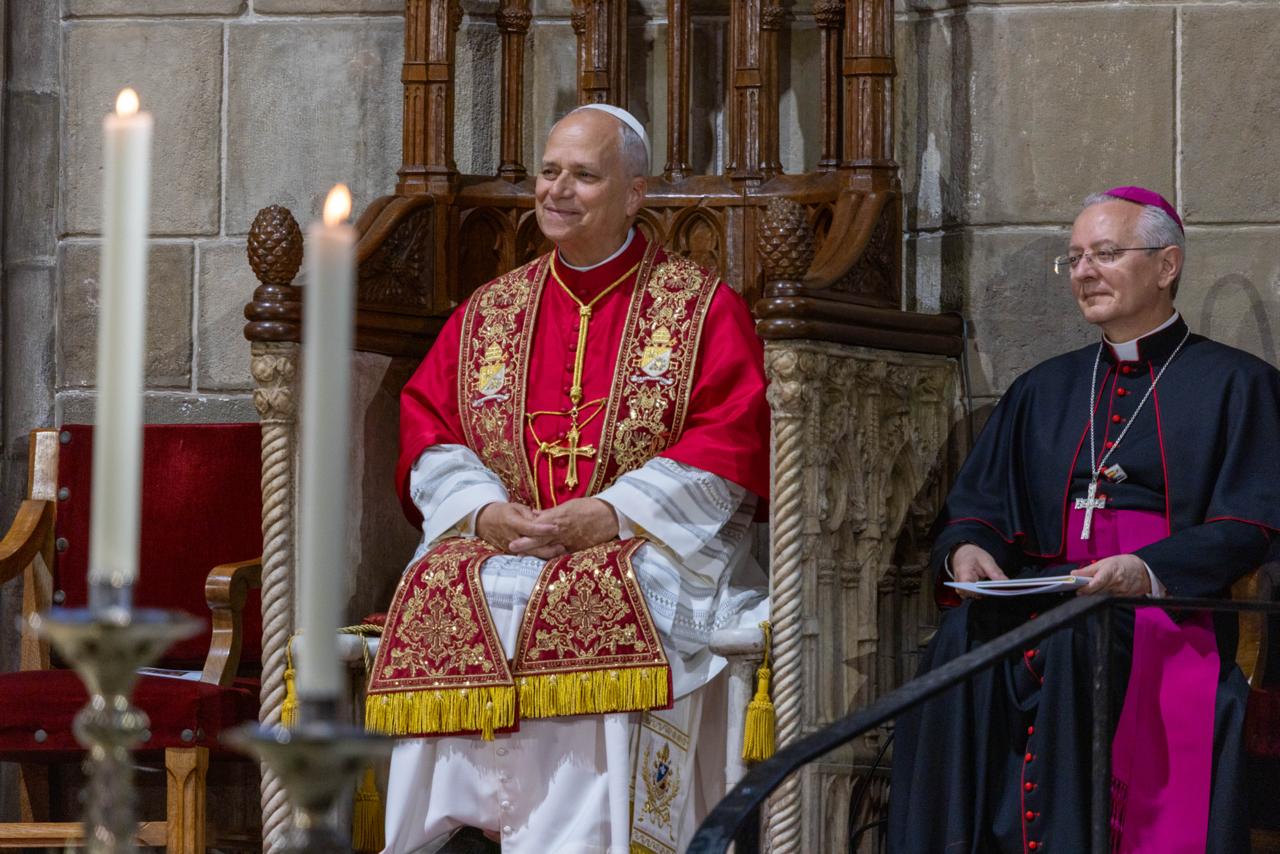




After a meeting at the Vatican in October last year, Pope Leo XIV and a network for victims of clergy sexual abuse and continue to build collaboration through conversations with the Vatican’s safeguarding commission.
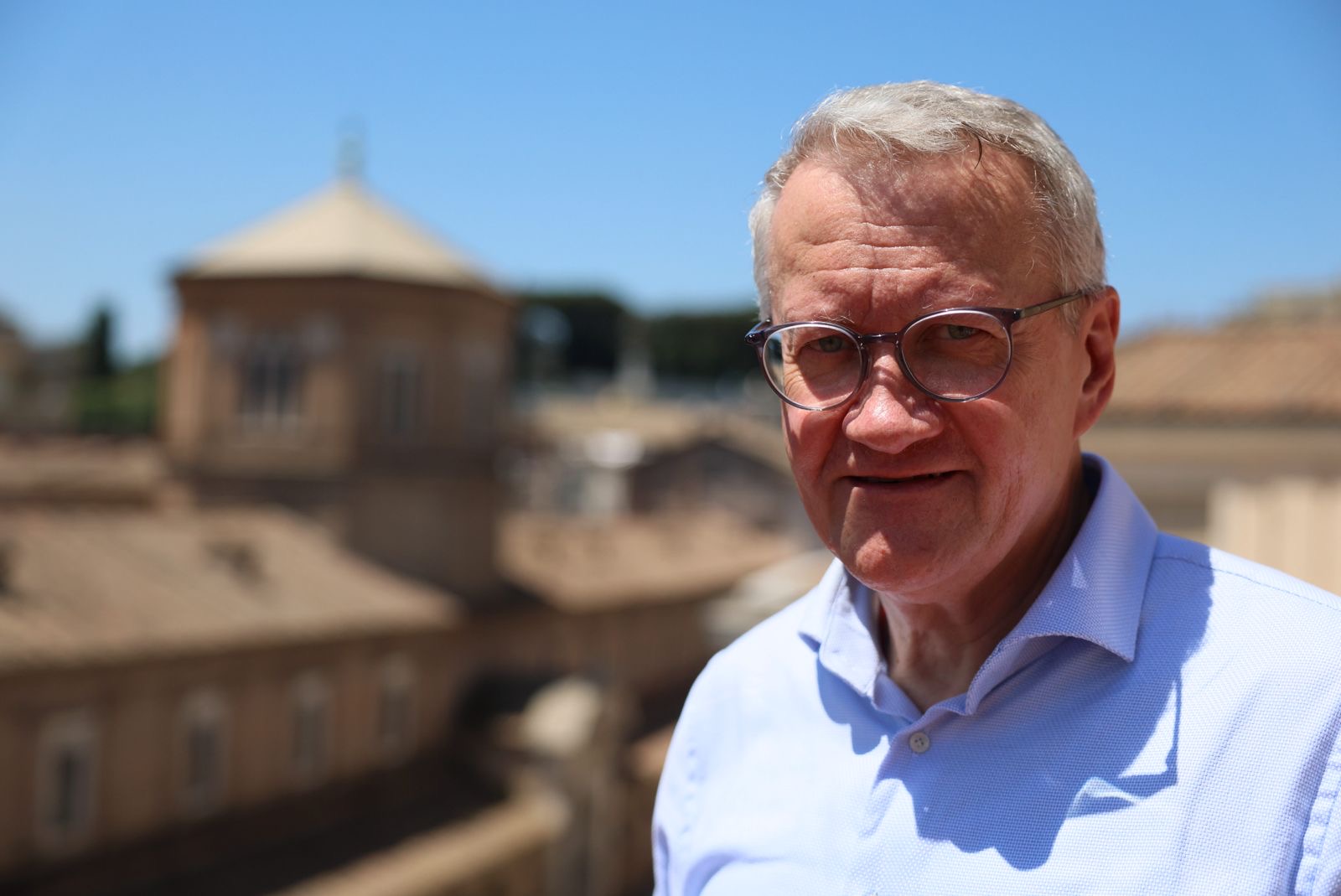
The pope “is interested in dialogue and in seeing what can be done in his new role. I think the fact that he received us was a sign of trust on his part, because in the past the relationship between survivors’ groups and the Vatican has not been easy, so we took a step forward,” Matthias Katsch, a member of the advocacy organization Ending Clergy Abuse (ECA) told EWTN News in Rome.
Katsch, who is from Germany, is a member of ECA’s board of directors and one of the members most critical of policies adopted to prevent abuse within the Church.
Almost eight months after the initial step of meeting with Pope Leo, the relationship between the Vatican and ECA has been formalized.
On June 15-16, the board of directors of ECA — which is present in 14 countries across five continents — held a meeting with top officials of the Pontifical Commission for the Protection of Minors (PCPM) at Palazzo Maffei, a Vatican-owned property in the center of Rome. The PCPM is responsible for promoting safeguarding policies in the Church.
The pope, though not present, proposed the meeting, which will have a second part later this year.
The private meetings — which included, among others, the commission’s secretary, Bishop Luis Manuel Alí Herrera — were “very positive,” according to Katsch.
The role of the organization Katsch represents, in his words, is “to engage in dialogue with survivors” of abuse and then to press the appropriate Church authorities so that “the changes that are needed can be carried out step by step.”
“We have common ground: on both sides we have the same interest. We want to prevent this from continuing to happen,” said Katsch, who has spoken publicly about the abuse he suffered at a Jesuit school in Berlin.
The meeting coincided with the recent approval of the PCPM’s statutes by Leo, a measure which, according to the body itself, strengthens the Church’s commitment to protecting minors and vulnerable persons worldwide.
For ECA representatives, the meeting with the commission was an opportunity “to learn firsthand what this means for the policy they are going to pursue.”
“There is now more clarity about roles in this process and, from what I understand, the idea is that it is not only the commission or any other body that is responsible for the protection of minors and accountability … but that the entire Church, in particular the entire Curia, is responsible,” Katsch stressed.
In the opening session, the president of the pontifical commission, Archbishop Thibault Verny, insisted that the obligation to listen to victims “must be an active exercise with concrete results in order to be credible.”
During the working sessions, ECA representatives called on the Catholic Church to adopt globally the accountability standards in force in the United States, which provide for permanent removal from ministry when abuse is admitted or proven in a legal process.
“We are calling for zero tolerance; that it become law, and this basically means that a priest who has abused a minor [is removed from ministry] within the Church … that he no longer has a leadership role within the Church. We are not talking about expelling someone from the Church, nor from the priesthood, because that is not within our competence,” he explained.
This is a specific norm for the United States, approved in 2002 after a historic meeting of priests from that country at the Vatican, following the Boston Globe’s January 2002 exposure of the case of Father John Geoghan, who had abused more than 130 children for over 30 years.
After the meeting in the Vatican, all U.S. bishops gathered in Dallas and signed a document titled the “Charter for the Protection of Children and Young People,” which included these measures and was ultimately approved in December 2002.
In June, this document was revised, but it maintained the original text’s central aim of “addressing, with transparency and accountability, allegations of abuse committed by members of the clergy,” as Bishop Barry Knestout of Richmond, Virginia, and chair of the Committee for the Protection of Children and Young People, explained during the session.
“After 25 years, we have seen that it has worked. Hundreds of priests in the United States have been removed from ministry for having abused children. So why cannot that clarity be applied in other parts of the world? That is our question,” Katsch said, noting that PCPM is not the Holy See’s legislative body but is responsible for guiding safeguarding strategies alongside other dicasteries of the Roman Curia.
The Vatican will hold a plenary session in September to evaluate the impact of abuse prevention policies and procedures, with the aim of identifying both the progress made and the system’s shortcomings.
ECA plans to present a proposal for a universal law that includes, among other measures, the creation of an independent agency with investigative authority, the obligation to issue recommendations and public reports, and a guarantee of transparency throughout the process.
The Code of Canon Law establishes that bishops must open a preliminary investigation as soon as they become aware of a possible crime in their dioceses. After completing the proceedings, they must send the acts to the Dicastery for the Doctrine of the Faith, along with their assessment.
However, a lack of resources in this body remains one of the main obstacles. “What is needed for justice to be effectively carried out in individual cases is that the team of those who investigate cases from Rome, cases that arrive in Rome, has a number of people proportionate to the number of cases worldwide. I understand that there are now around 20 prosecutors for the whole world, and that does not work,” Katsch said.
Another request is the obligation to share information with civil authorities. Katsch emphasized the importance of “cooperating with and reporting to the ordinary courts the cases that come to their attention,” while acknowledging the complexity of this issue depending on different legal systems.
“There are countries that do not have the legal standards that allow this, [so] one cannot be certain that the laws are applied fairly,” he explained, without specifying particular cases.
The PCPM confirmed to EWTN News that it agreed to continue dialogue with ECA beyond the first meeting at the group’s request.
This story was first published by ACI Prensa, EWTN News’ Spanish-language sister service. It has been translated and adapted by EWTN News English.