
Pope Leo XIV recently completed an 11-day trip visiting the faithful in Algeria, Cameroon, Angola, and Equatorial Guinea. With stops in 11 cities across those countries, the Holy Father met with the youth, political leaders, prisoners, families, and many more to share the Gospel message.
Here are seven powerful moments from Pope Leo’s trip to Africa:
1. Moving visit to the land of St. Augustine
Pope Leo XIV traveled from Algiers to Annaba — ancient Hippo — in what for the Augustinian pontiff amounted to a return to the roots of his faith and vocation.
After a flight of about an hour, the pope arrived in the city most closely associated with St. Augustine, who served as bishop of Hippo from 396 to 430.
Despite pouring rain, the pope walked through the ruins and, at the end of the route, laid a wreath of flowers and stopped for a moment of prayer, visibly moved.
2. Visit to the Great Mosque of Algiers
While in Algeria, the pope visited the Great Mosque of Algiers (Djamaa el Djazaïr), often referred to as the “Mosque of Algeria.” Featuring the world’s tallest minaret — rising approximately 265 meters (about 870 feet) — and ranking as the third-largest mosque after those in Mecca and Medina, the monumental complex can accommodate up to 120,000 worshippers.
The tradition of popes visiting mosques began with Pope John Paul II, who in 2001 became the first pope in history known to have entered a mosque when he visited the Great Mosque of Damascus in the capital of Syria.
Pope Leo addressed criticism directed toward him on April 15 on board the papal plane after leaving Algiers bound for Cameroon.
“I think the visit to the mosque was significant [and showed] that although we have different beliefs, we have different ways of worshipping, we have different ways of living, we can [still] live together in peace,” the Holy Father said.
“I think that to promote that kind of image is something which the world needs to hear today,” he said, arguing that such visits show that “together we can continue to offer in our witness as we continue on this apostolic voyage.”
3. Joy-filled children welcome Pope Leo in Cameroon
Pope Leo XIV was welcomed by the songs and dances of children at the Ngul Zamba Orphanage in Yaoundé, Cameroon.
“Dear children, I know that many of you have endured difficult trials. Some of you have known the pain of loss through the death of parents or loved ones. Others have experienced fear, rejection, abandonment, deprivation, and uncertainty. Yet, you are called to a future that is greater than your wounds. You are bearers of a promise,” the pope said.
Run for 40 years by the religious congregation the Daughters of Mary, the Ngul Zamba Orphanage — whose name means “Strength of God” — provides food, lodging, and education to poor or abandoned children.
In another heartfelt moment, at the end of the afternoon Mass in Bamenda, Cameroon, as the pope was preparing to leave the airport and get into his car, a little girl ran up to hug him. This spontaneous gesture, amid the joy and emotion of the 20,000 present, captured the hearts of millions around the world.
4. Rosary gathering at the Mama Muxima Shrine
While in Angola, Pope Leo took part in a rosary gathering at the Marian shrine of Mama Muxima.
The shrine, whose name means “Mother of the Heart” in Kimbundu, is one of Angola’s best-known Marian sanctuaries. Built by the Portuguese in the 17th century on a hill overlooking the Kwanza River, it has long been a place of pilgrimage and prayer for Angolan Catholics.
The crowd in attendance erupted into applause when the Holy Father spoke in Kimbundu, a Bantu language spoken in Angola.
He said: “Mama Muxima, tueza kokué, Mama Muxima, tutambululé,” which means: “Mother of the heart, we come to you; Mother of the heart, receive us.”
5. Pope Leo visits psychiatric hospital
The Holy Father visited the Jean-Pierre Olié Psychiatric Hospital in Equatorial Guinea. With its six pavilions, it represents a major development in the treatment of mental illness in Equatorial Guinea, where psychiatric disorders were historically neglected. Founded in 2014, it is the country’s first modern center of its kind and has become a symbol of the national commitment to integrating patients into society.
The event included songs, dancing, and testimonies from both the hospital’s director and a patient, Pedro Celestino Nzerem Koose. A moving poem by a former patient was also recited.
“Whenever I visit a hospital, I have mixed feelings: on the one hand, I feel sorrow for the patients and their families. On the other, I admire and am comforted by all that is done there each day to serve human life,” the pope said in an address delivered in Spanish. “I feel the same way here, but today, I find — and I hope the same is true for you — that joy prevails. It is the joy of meeting in the name of the Lord and of caring for those who are in frail health.”
6. Pope Leo visits a prison
The pope paid a visit to the Bata penitentiary in Equatorial Guinea and told inmates that “no one is excluded from God’s love” and urged them to see that even behind bars, there remains the possibility of change, reconciliation, and hope.
This local prison is one of the country’s harshest and long known for difficult detention conditions.
One of the more than 600 inmates thanked the pope for his visit and support.
“We wish to thank you for your visit and your support,” the prisoner said. “Your presence reminds us of the importance of faith and redemption. We ask for your blessing to keep moving forward and to come out of this as better people. We are grateful for your compassion and for your message of hope.”
7. The final Mass in Africa
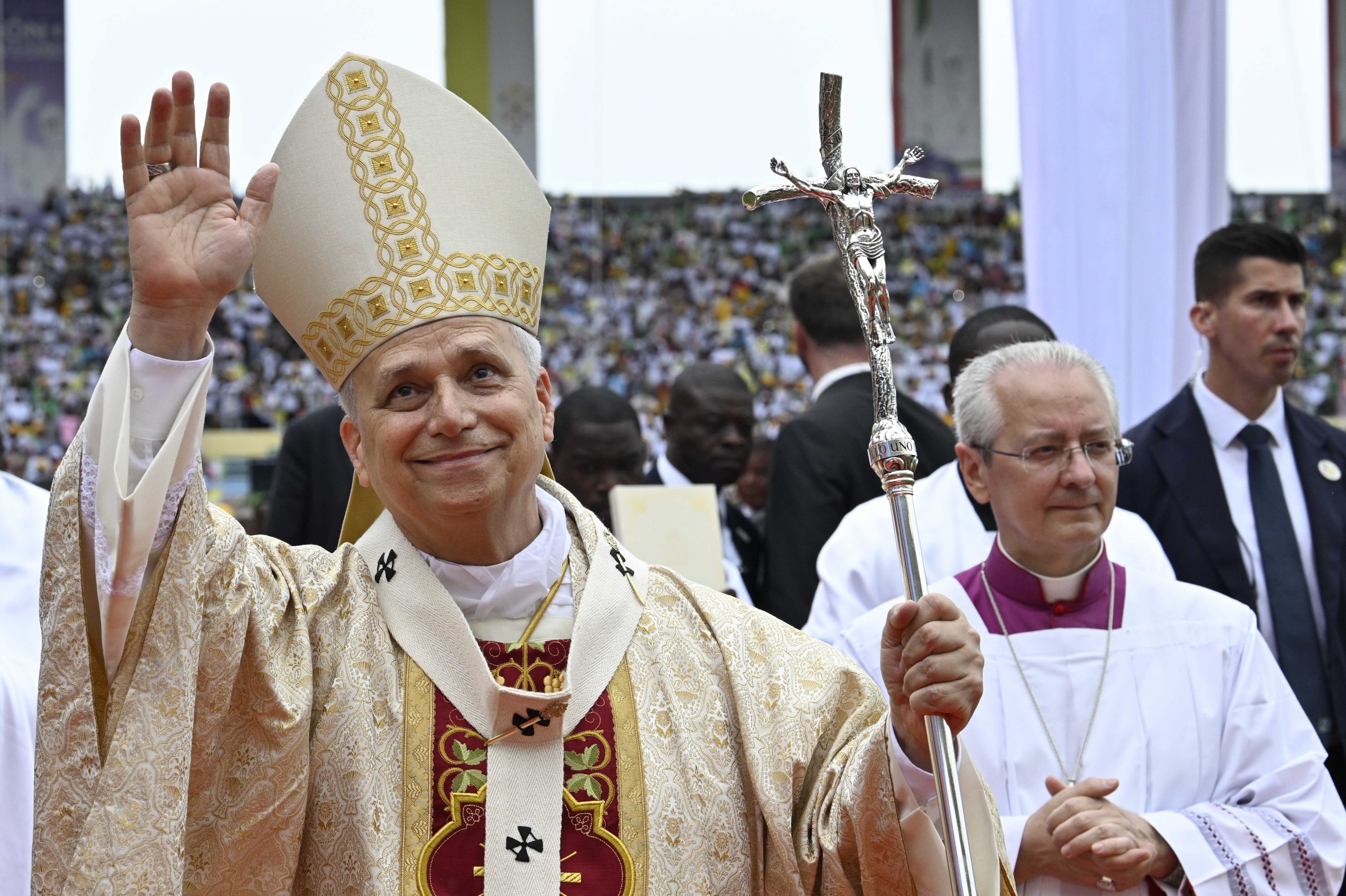
Pope Leo XIV celebrated the final Mass of his Africa trip at Malabo’s stadium, urging the Church in Equatorial Guinea to continue proclaiming the Gospel “with passion” and to bear witness through lives shaped by faith, service, and solidarity.
The Mass in the stadium, where about 30,000 faithful were expected, marked the pope’s last major public event in Equatorial Guinea, the fourth and final African nation on his 11-day journey.
After riding through the crowd in the popemobile, Leo began Mass amid flags, songs, and colorful hats, with music and dance accompanying the liturgy.
The Holy Father also prayed before an image of Our Lady of Bisila, mother and patroness of Equatorial Guinea.
Clothed in white and blue, carrying the child Jesus on her back in the traditional African way, the Virgin of Bisila shows a mother who walks with her people in every struggle and hope. According to local tradition, she appeared to a humble Bubi woman on Bioko Island in the early 20th century (exact year is not clearly attested), and love of her grew until she became the beloved icon of the nation’s Marian devotion.