

The eight chapels of Spain’s Toledo cathedral, which will celebrate the jubilee of its 800th anniversary starting next October, evoke centuries of devotion, history, and art in Spainʼs primatial diocese.
Among its many treasures, the cathedral features eight chapels where fragments of history, traces of the God-inspired actions of kings, cardinals, and archbishops, and the evolution of sacred art all intertwine.
1. Main chapel
The main chapel is the liturgical heart of the Toledo Cathedral. Its current layout is the result of an alteration initiated by Cardinal Francisco Jiménez de Cisneros in the 15th century, which involved relocating the original burial sites of the monarchs Alfonso VII, Sancho the Desired, and Sancho the Brave.
Also located there is the tomb of Cardinal Pedro González de Mendoza, a pivotal figure in the history of the Catholic Church in Spain, who was closely linked to the evangelization efforts of the Catholic monarchs Ferdinand and Isabella in Spanish America.
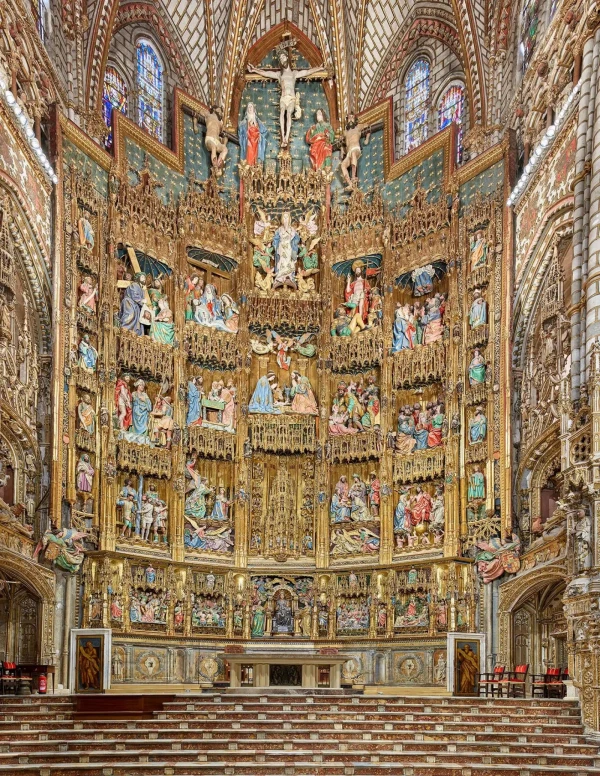
The main altarpiece, made of gilded and polychromed wood, is considered a masterpiece of Hispano-Flemish Gothic art, created by some of the most renowned sculptors and polychromists of the era. It depicts numerous Gospel scenes, such as the Nativity, the Adoration of the Magi, Pentecost, and scenes from the Passion, all crowned by a large Crucifixion scene at the top.
2. Chapel of the Descent
Founded by Enrique II of Castile, this space stands on the site where tradition places the high altar of the Visigothic church dedicated to the Virgin Mary, the church that gave rise to the cathedral. Legend also attributes a miraculous event to this location: the Virgin Mary descended from heaven to place a chasuble on St. Ildefonso, archbishop of Toledo and a fervent defender of the mystery of her immaculate purity.
The altarpiece, restored by order of Cardinal Bernardo de Sandoval y Rojas, depicts this miraculous episode, among other scenes. Cardinal Baltasar Moscoso y Sandoval is buried here.
3. Chapel of St. Ildefonso
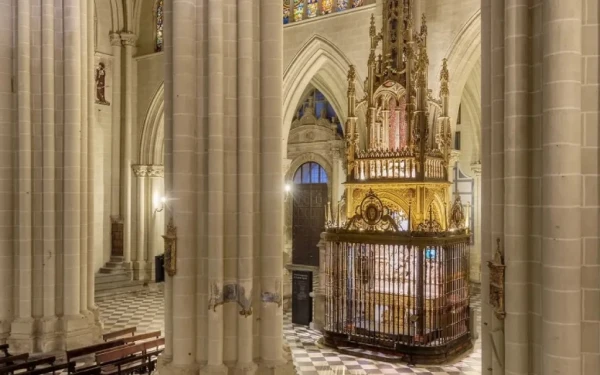
Located in the center of the churchʼs apse, this octagonal, Gothic-style chapel houses the tomb of Archbishop Gil Carrillo de Albornoz, a papal legate, a minister of Alfonso XI, and founder of the Royal Spanish College in Bologna.
Numerous archbishops from the 14th through the 21st centuries are also buried within its walls. The last to be interred there was Cardinal Marcelo González Martín in 2004.
4. Tabernacle Chapel
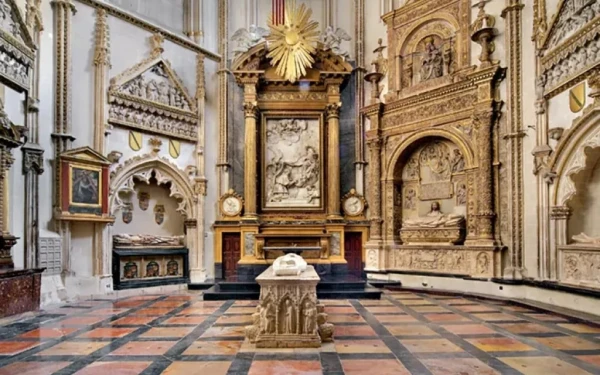
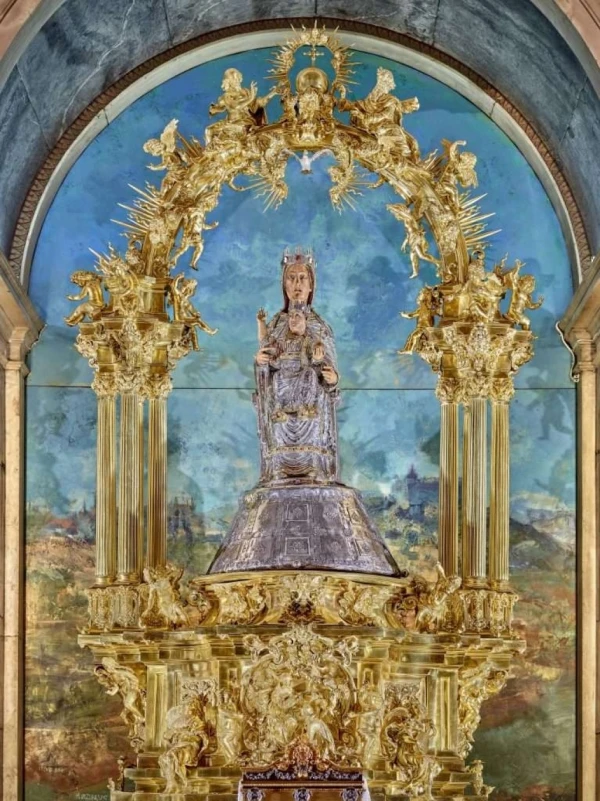
In the Tabernacle Chapel, in addition to the adoration of the Eucharist, the chapelʼs patroness, the Virgin of the Tabernacle, is venerated. The Virgin is represented by 12th-century wooden carving, overlaid with silver and seated upon an 18th-century gilded silver throne.
Tradition holds that the statue was hidden during the Muslim invasion in the early 8th century, and following the Reconquista of Toledo at the start of the second millennium, miraculously emerged from the well in the cathedral cloister, bearing a lit candle.
Clad in marble, the chapel’s dome features frescoes depicting the Evangelists, prophets, and Doctors of the Church. The chapel is also adorned with paintings dedicated to Sts. Bernard, Eugenius, Ildephonsus, and Leocadia.
It was inaugurated in 1616 in the presence of Felipe III.
5. St. Blaise Chapel
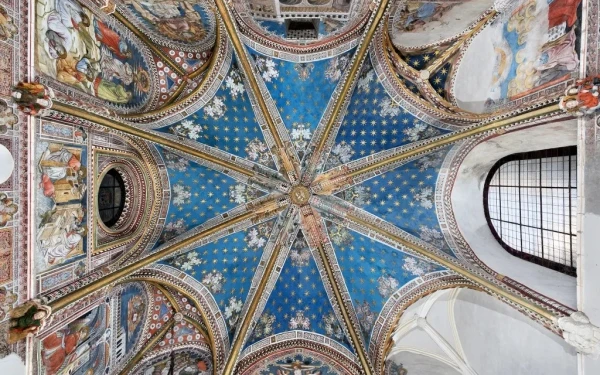
Located in the northeast corner of the cathedral cloister is the St. Blaise Chapel, commissioned in the late 14th century by Archbishop Pedro Tenorio to serve as his burial place.
The chapelʼs most notable features are its murals, which depict the articles of faith contained in the Creed and scenes of the Last Judgment, as well as numerous Gospel images and episodes from the lives of St. Anthony and St. Blaise, along with miracles attributed to St. Peter.
These works are considered among the most significant examples of the Spanish International Gothic style, inspired by the Italian genius Giotto and the Florentine school.
6. St. James Chapel
Built in the mid-15th century, the St. James funerary chapel is designed in the Toledan Gothic style and is located in the outer ambulatory. It was built by order of the royal favorite of Juan II of Castille, Constable Álvaro de Luna, who was ultimately executed, and his spouse Juana Pimentel, whose tombs of sculpted alabaster are situated in the center of the chamber.
Archbishops Juan de Cerezuela and Pedro de Luna, along with some of the constableʼs relatives, are buried along the side walls.
7. Chapel of the New Kings
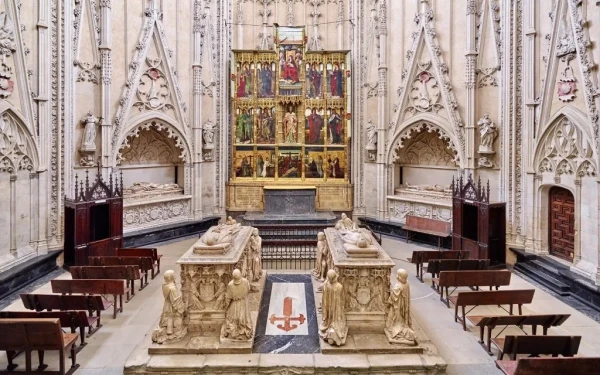
The Chapel of the New Kings is one of the areas of the cathedral richest in history. It represents the merging of royal chapels originally established in the 13th century. With the authorization of Emperor Charles V, and to meet liturgical needs, the chapel was relocated to the ambulatory in the 16th century.
It houses the tombs of the Trastámara dynasty, showcasing a unique example of Late Gothic art evolving toward the Neoclassical style.
8. Mozarabic Chapel
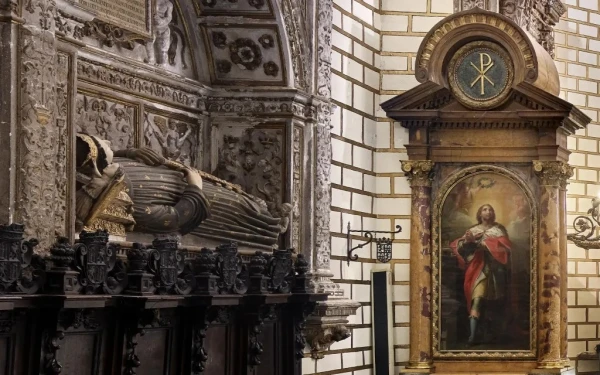
Erected by Cardinal Jiménez de Cisneros in 1502, this chapel was built to perpetuate the celebration of the Hispanic-Mozarabic rite — the oldest liturgy in Hispanic Christianity, which was preserved only in Toledo after the city was reconquered in 1085.
In 1500, Cardinal Jiménez de Cisneros restored this rite; it is celebrated every morning thanks to a permission granted by Pope Alexander II at a time when the Roman rite, established in the 11th century, was spreading across the Iberian Peninsula.
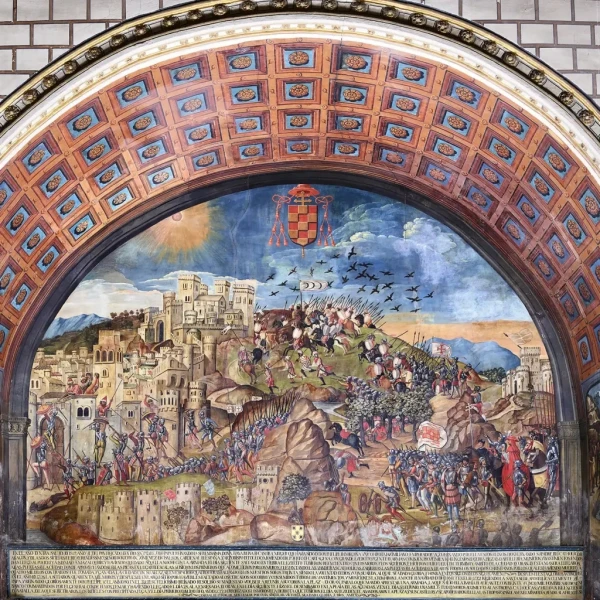
It is located in the former chapter house, and its dome, damaged by a fire in 1622, was rebuilt by El Grecoʼs son. The altarpiece, remodeled in the 18th century, is crowned by an Ibero-American crucifix.
This story was first published by ACI Prensa, the Spanish-language sister service of EWTN News. It has been translated and adapted by EWTN News English.