
When Catholics hear about the works of mercy, they may think first of feeding the hungry, visiting the sick, or clothing the naked. These corporal works of mercy address the physical needs of others, but the Church also teaches that people have spiritual needs that also must be addressed.
The seven spiritual works of mercy include: admonish the sinner, instruct the ignorant, counsel the doubtful, comfort the sorrowful, bear wrongs patiently, forgive injuries, and pray for the living and the dead.
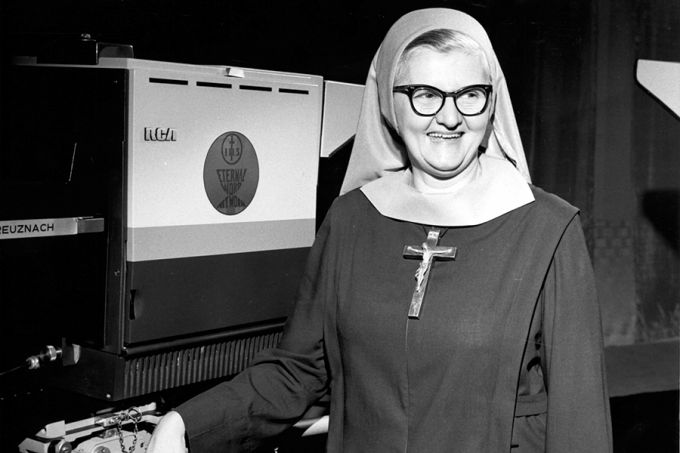
Few modern Catholic voices spoke about these realities as plainly — and as humorously — as Mother Angelica, the foundress of EWTN. Through her long-running television program “Mother Angelica Live,” she encouraged Catholics to live the Gospel in ordinary life.
Her words offer practical insight into how we can live these works of mercy today:
1. Admonish the sinner
To admonish the sinner means to help someone recognize sin and turn back to God. This work of mercy must always be done with humility and charity, never with condemnation.
Mother Angelica often reminded viewers that conversion is rooted in God’s mercy: “God always forgives when you are totally repentant and you desire to change. He forgives… and he never gets tired of forgiving. Never.”
Because of God’s endless mercy, we should never hesitate to encourage someone to return to him and help them encounter God’s love, which leads to repentance.
2. Instruct the ignorant
To instruct the ignorant is to teach the truths of the faith to those who do not know them. This can happen in classrooms, parishes, homes, and everyday conversations.
Mother Angelica frequently reminded her audience that every person has a deep spiritual hunger: “Everyone hungers for God. Everyone needs the Lord. A tremendous amount of people don’t know they need God — they go every direction possible, and everywhere they go, they still feel that vacuum, that hunger for God.”
Teaching the faith — whether to children, friends, or fellow parishioners — is therefore an act of mercy. It helps fill the spiritual hunger that only God can satisfy.
Mother Angelica also emphasized that instruction begins in the home.
“I cannot bring Christ to my neighbor and to the world if I have not first given him to my family,” she said.
3. Counsel the doubtful
Many people struggle with doubt — about faith, about moral decisions, or about their place in God’s plan. To counsel the doubtful means offering guidance, wisdom, and encouragement.
When we counsel someone who is uncertain or searching, we remind them that God has a purpose for his or her life and desires that person’s holiness.
Mother Angelica often spoke about the unique vocation and plan God gives to every person.
“God has designed for each one of us a certain degree of holiness. Each one. It’s as if no one else existed,” she said.
4. Comfort the sorrowful
Suffering touches every human life — through grief, illness, disappointment, or loneliness. Comforting the sorrowful means being present to those who suffer and reminding them that Christ is with them.
Mother Angelica spoke openly about suffering from her own experience of illness and hardship.
She once said: “Sometimes my worst day — one filled with pain and suffering — in the eyes of God is my best day if I’ve borne it cheerfully and with love.”
By helping others unite their suffering with Christ, we offer a consolation deeper than words. Sometimes the greatest comfort we can give is simply our presence and our prayer.
5. Bear wrongs patiently
This spiritual work of mercy calls us to endure offenses, inconveniences, and injustices without bitterness.
Mother Angelica once explained that our trials can become opportunities for holiness: “Jesus is giving you such an opportunity to be holy, holier than all the saints that have ever been, because the world is in such need of shining lives, beacons to see by,” she said.
Responding to difficulties with patience rather than anger allows Christ’s light to shine through us.
6. Forgive injuries
Forgiveness is perhaps the most challenging spiritual work of mercy. When someone hurts us deeply, resentment can take root in our hearts, but the Gospel calls us to forgive as God forgives us.
Mother Angelica spoke frequently about the need to forgive others.
“We have to forgive instantly. That’s what the Lord did,” she once said.
On another occasion she said: “You can’t go to heaven hating somebody. Forgive now. Be compassionate now. Be grateful now. Love Jesus and Mary now. Accept God’s will now.”
When we forgive others — even when it is difficult — we imitate the mercy of Christ.
7. Pray for the living and the dead
The final spiritual work of mercy is praying for the living and the dead. Interceding for others puts their needs before God and entrusts them to his mercy.
Mother Angelica often reminded viewers that prayer is not about trying to manipulate God but about giving ourselves to him: “God is not a slot machine. We don’t go to God to get something; we go to give something.”
Through prayer we offer our love, our trust, and our concern for others. The Church especially encourages prayers for the dead, asking God to bring them into the fullness of eternal life.