
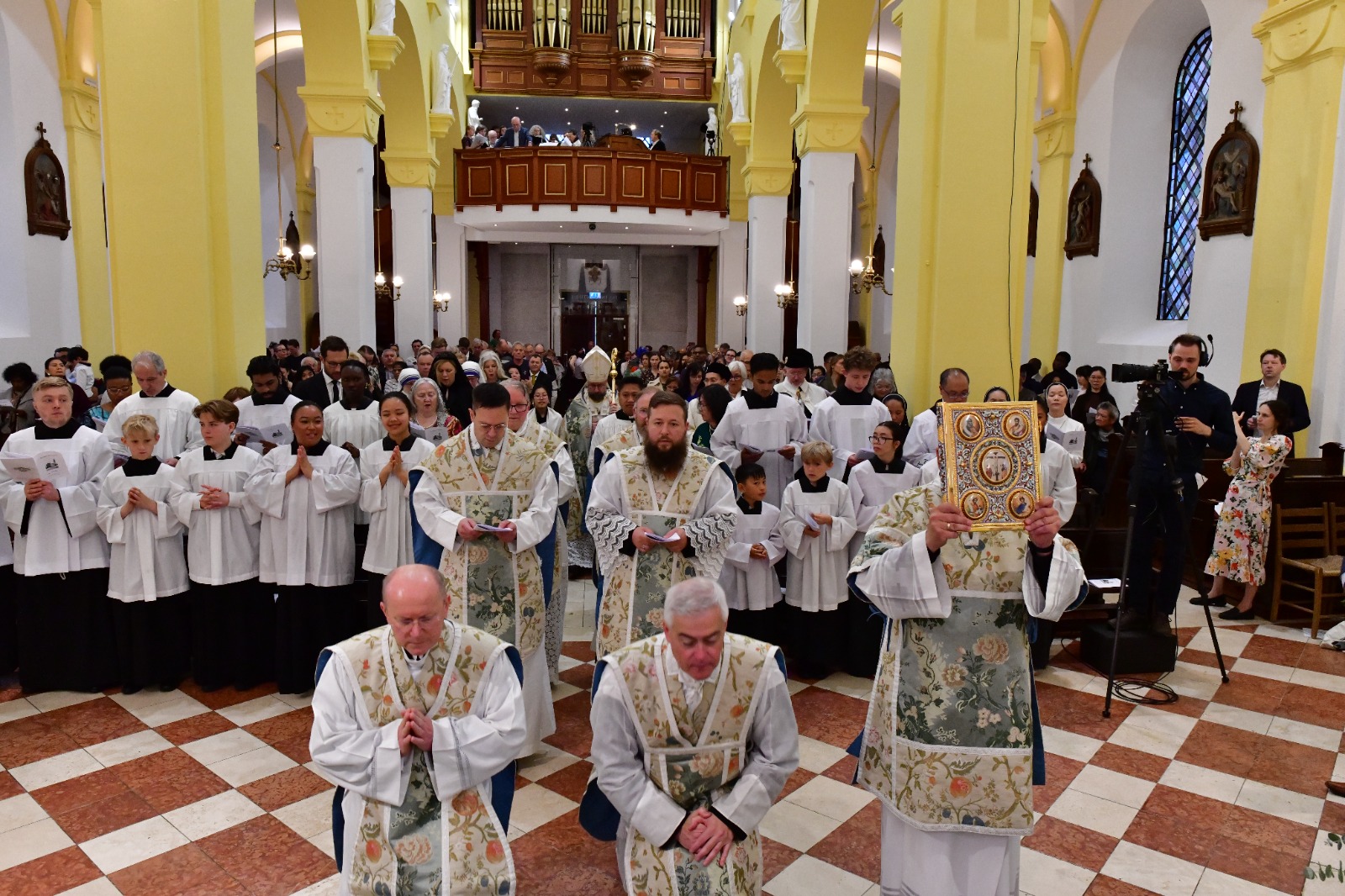
“Every holy Mass, when I look into the church from the altar, I see the whole world in front of me.”
For Dom Alois Brodersen, an Augustinian canon regular and parish priest of St. Paulʼs Catholic Church in Bergen, Norway, those words capture the reality of parish life.
Standing before a congregation representing more than 120 nationalities, he sees the fulfillment of a vision first imagined by the parishʼs founders nearly 150 years ago.
When St. Paulʼs was built in the 1870s, it seated more than 300 people despite serving a Catholic community of only a few dozen faithful. Its founders envisioned the church as a missionary bridgehead for Catholicism in Norway. Years later that vision has been realized.
Today, the parish is home to almost 20,000 Catholics from more than 120 nations.
“Experiencing all these people from all places in the world coming together and working for Christ, their piety and their faithfulness, thatʼs the greatest gift,” Brodersen told EWTN News.
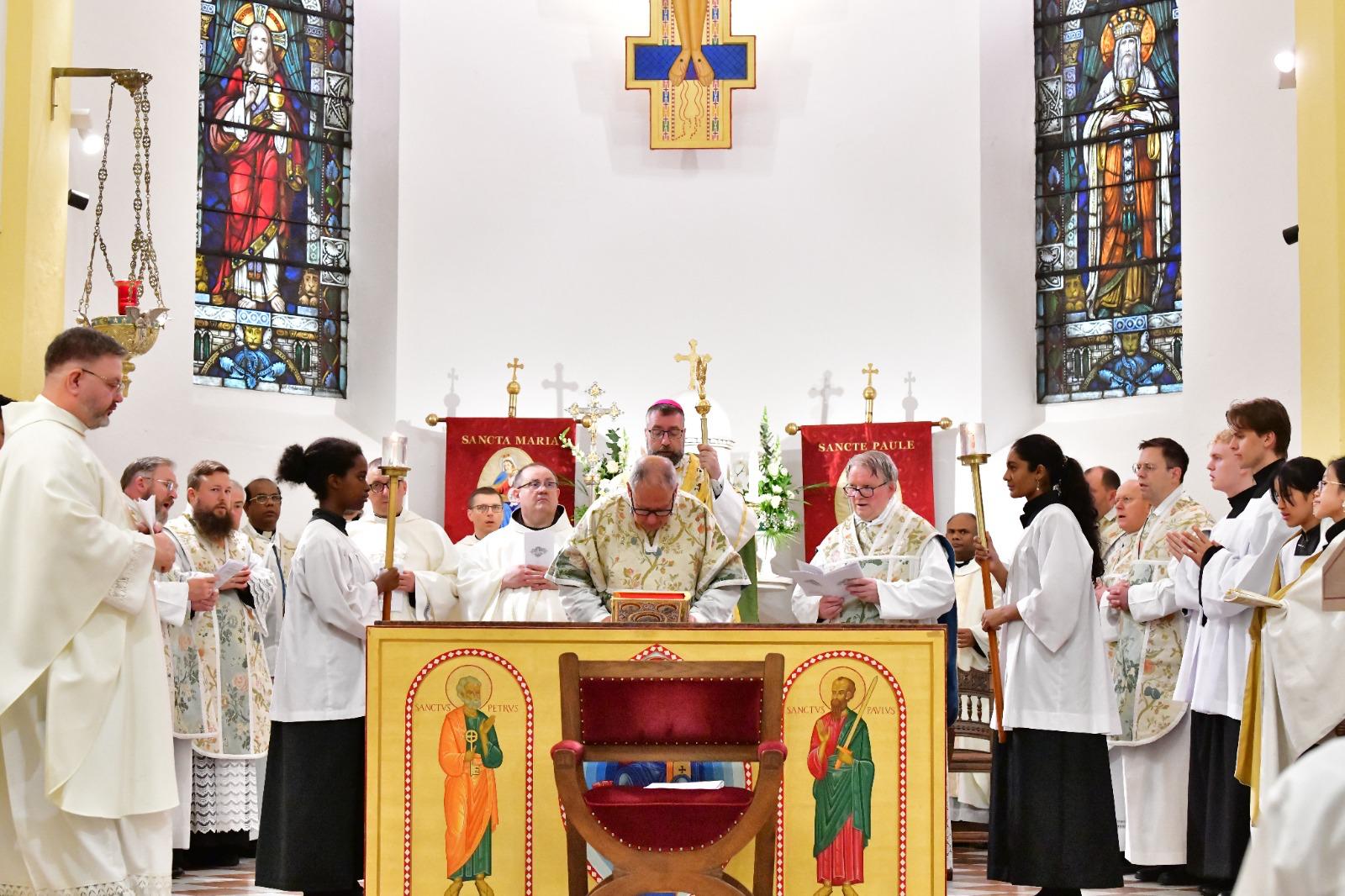
That vision was given fresh significance on June 28, when Bishop Fredrik Hansen solemnly consecrated St. Paulʼs Church a century and a half after the building first opened for worship.
A church built on faith and foresight
The congregation dedicated to St. Paul was founded in 1858 with the blessing of Pope Pius IX. As the Catholic community steadily grew, parish leaders acquired land on what was then the outskirts of Bergen and began constructing a permanent church in 1864.
Designed by Italian architect Edoardo A. Mella, the church took 12 years to complete. Its construction was financed through an international fundraising effort led by parish priest Father Daniel Stub, who secured support from Pope Pius IX, Emperor Franz Joseph of Austria, Queen Josephine of Norway and Sweden, and Catholics across Europe.
When the first Mass was celebrated on June 30, 1876, the newspaper Bergens Tidende described the new church as “one of the most beautiful houses of worship in the whole country.”
Yet one important ceremony never took place.
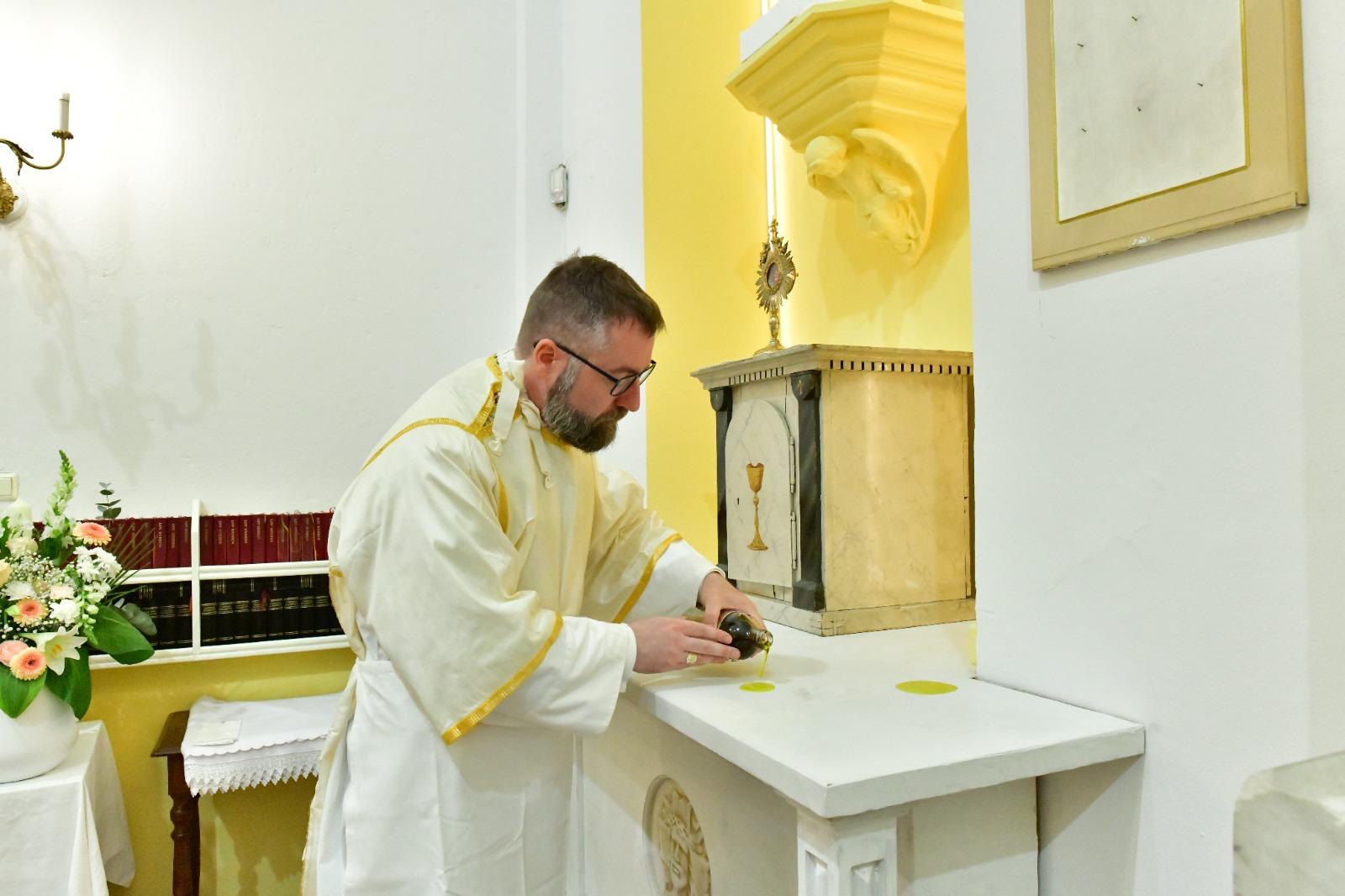
According to Brodersen, the church was not solemnly dedicated when it opened because the ceremony required a bishop assisted by 14 priests — more clergy than Bergenʼs fledgling Catholic community could provide. Although the altar was consecrated during renovations in 1972, the church itself remained undedicated for nearly a century and a half.
Completing a 150-year mission
That changed on June 28, when Hansen formally consecrated St. Paulʼs Church, entering the historic building accompanied by a traditional “buekorps,” one of Bergenʼs distinctive boys’ marching corps whose drums have long been part of the cityʼs cultural heritage.
For Hansen, the consecration represented far more than correcting a historical oversight.
“It is about bringing to completion the work of so many, undertaken over so many years,” he told EWTN News. Quoting Christʼs words that “one sows and another reaps,” he said todayʼs Catholics continue building upon the work begun by earlier generations who planted the seeds of the Church in western Norway.
Looking ahead, Hansen expressed hope that the anniversary would inspire renewed evangelization. Describing St. Paulʼs as a parish of nearly 20,000 faithful served by 10 priests, seven religious sisters, two schools, numerous national communities, and a growing catechetical program, he said he hopes the celebration will strengthen its mission of “teaching the faith, celebrating the sacraments, and building the parochial community.”
For Catholics living in increasingly secular societies, he added, “our common and enthusiastic witness of Catholic faith is crucial. By this we fortify our own community and preach to society at large.”
The universal Church in 1 parish
By the churchʼs centenary in 1976, membership had reached around 1,100. Today it numbers nearly 20,000, with much of the growth driven by successive waves of immigration from Vietnam, India, Chile, the Philippines, Poland, Lithuania, and dozens of other countries.
“We have more than 120 different nations in the parish,” Brodersen said. “They all bring their piety, their traditions with them, and they are very active in the parish.”

Rather than dividing the parish, he explained that diversity has strengthened it. During Bergenʼs annual Corpus Christi procession, the parishʼs major national communities each prepare one of the outdoor altars.
“Everybody is working together on this great project,” he said.
The universal character of St. Paulʼs becomes tangible as the church celebrates Masses in Norwegian, Vietnamese, Spanish, French, Polish, Lithuanian, Tamil, and Tagalog, reflecting the diverse backgrounds of its parishioners.
Yet many parishioners regularly attend liturgies outside their own linguistic communities, including the Saturday evening Latin Mass. “Holy Mass is there for everybody,” Brodersen noted. “Itʼs not all about understanding the words spoken, because you know the Mass and you take part in it by heart.”
For him, St. Paulʼs demonstrates that cultural diversity need not weaken the Church but can deepen its witness.
“It is possible, by all differences in language, culture, and whatever, to work together,” he said. “It is possible to be one in Christ.”
“When people see this church so full that sometimes people have to stand outside because there is no room inside anymore,” Brodersen reflected, they encounter something increasingly uncommon across much of Western Europe.
And each time he stands at the altar and looks across a congregation drawn from every continent, he sees the vision the founders of St. Paulʼs Church had.
“I see the whole world united in adoration.”