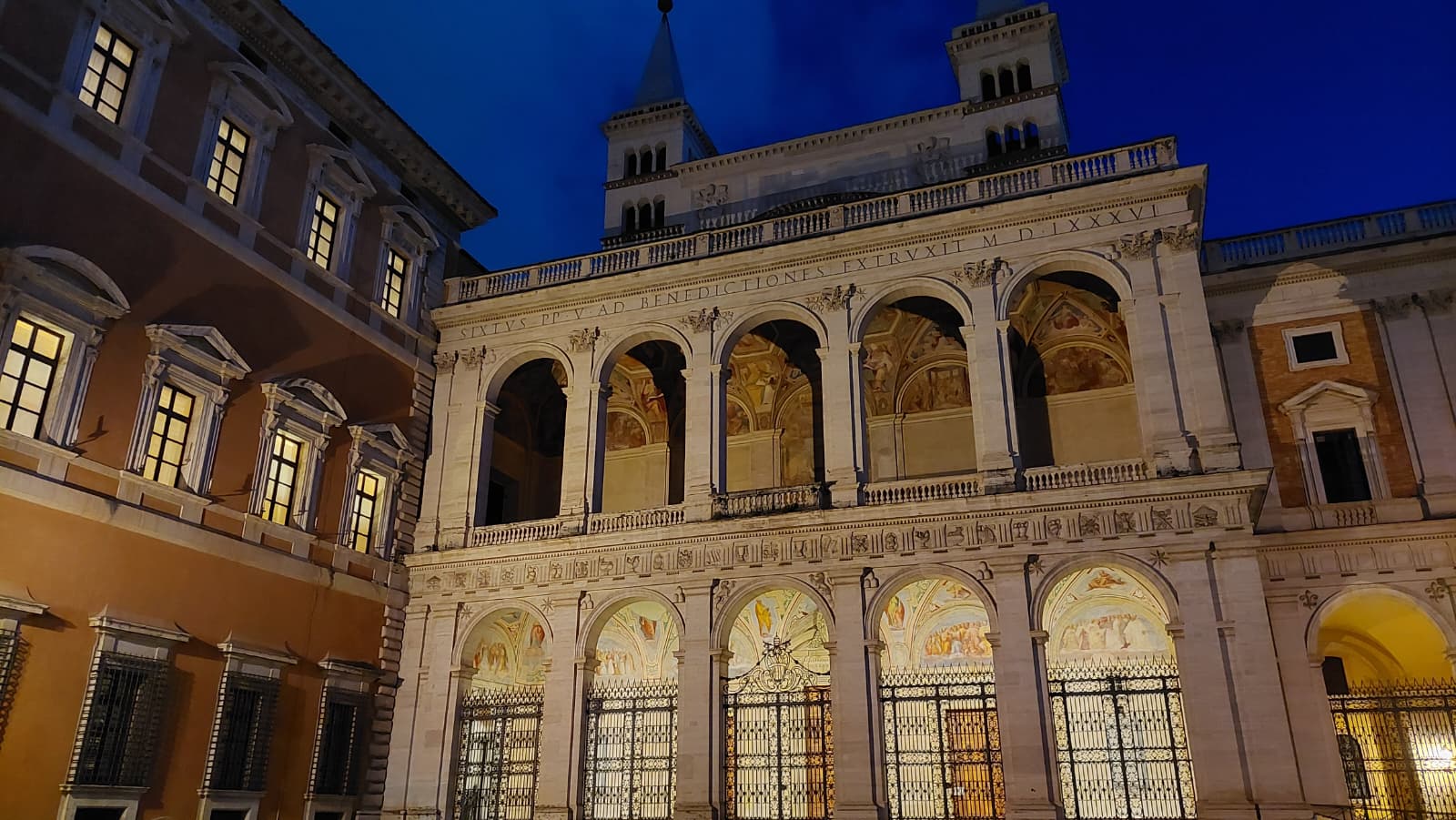

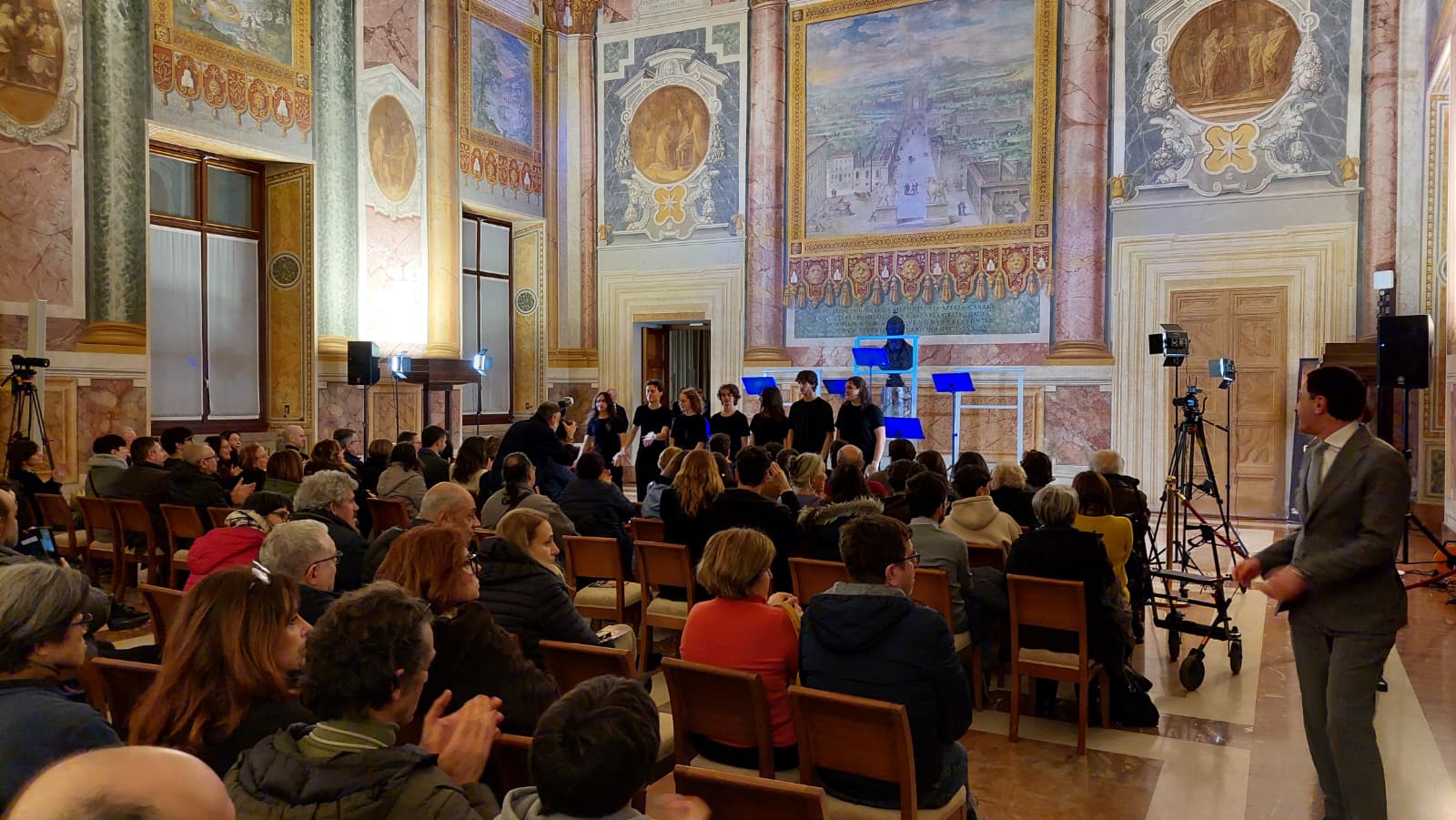
On Saturday, Feb. 14, the humanitarian situation in Gaza was the focus of a day of the arts at the apostolic vicariate in Rome. In the halls of the Lateran Apostolic Palace, the third edition of the initiative focused on the Gaza Strip, burdened by destruction and loss, where the suffering of its residents calls for ongoing attention.
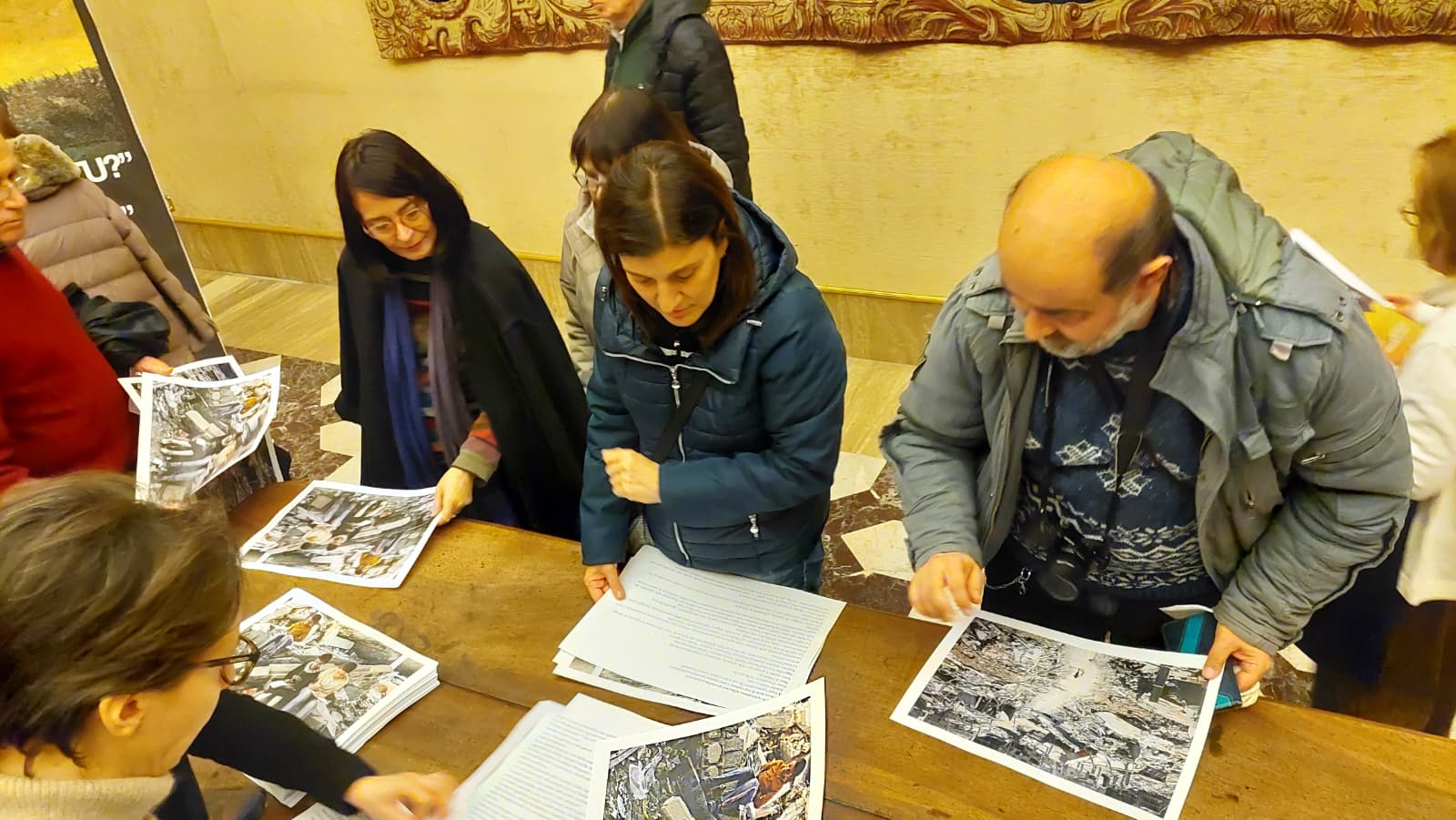
The event offered an artistic journey divided into four consecutive performances under the title “If There Were Water.”
Father Gabriele Vecchioni, deputy director of the University Pastoral Office at the vicariate, explained at the event that art stands in direct opposition to adaptation and forgetfulness. Shedding light on Gaza, he said, means confronting what the world has heard in recent months: the killing of 64,000 people, including 18,000 children — figures that an arts day insists must not be archived but preserved as an active memory.
In the “Hall of Reconciliation,” the theatrical work “Gaza: Before the Silence” by Francesco D’Alfonso was performed by first-year students of the National Academy of Dramatic Art Silvio D’Amico. Through poetry, music, international reports, and literary excerpts, the performance restored faces and names to the victims. White shrouds and the stark numbers of the tragedy became signs of a collective responsibility shared by all.
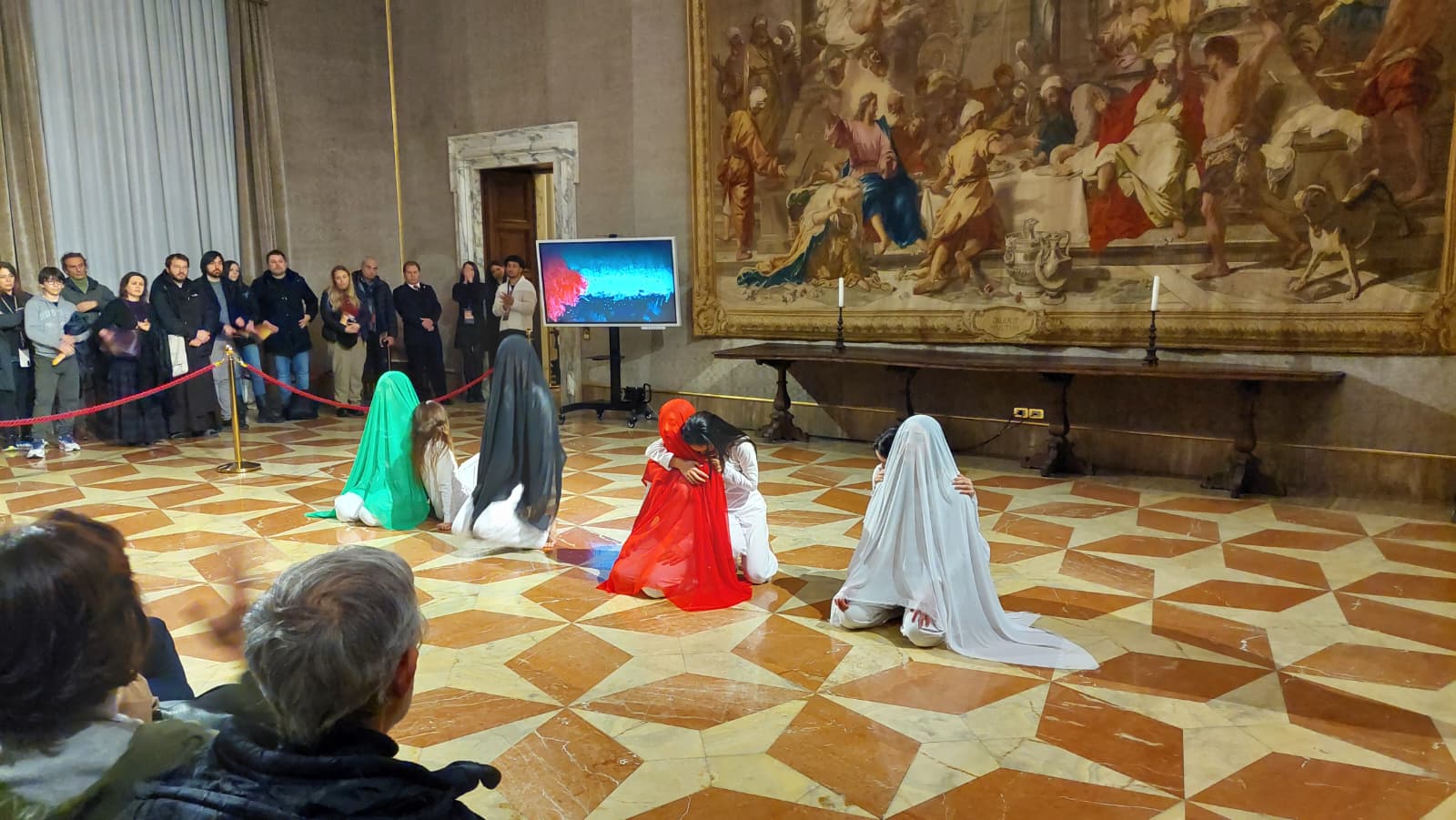
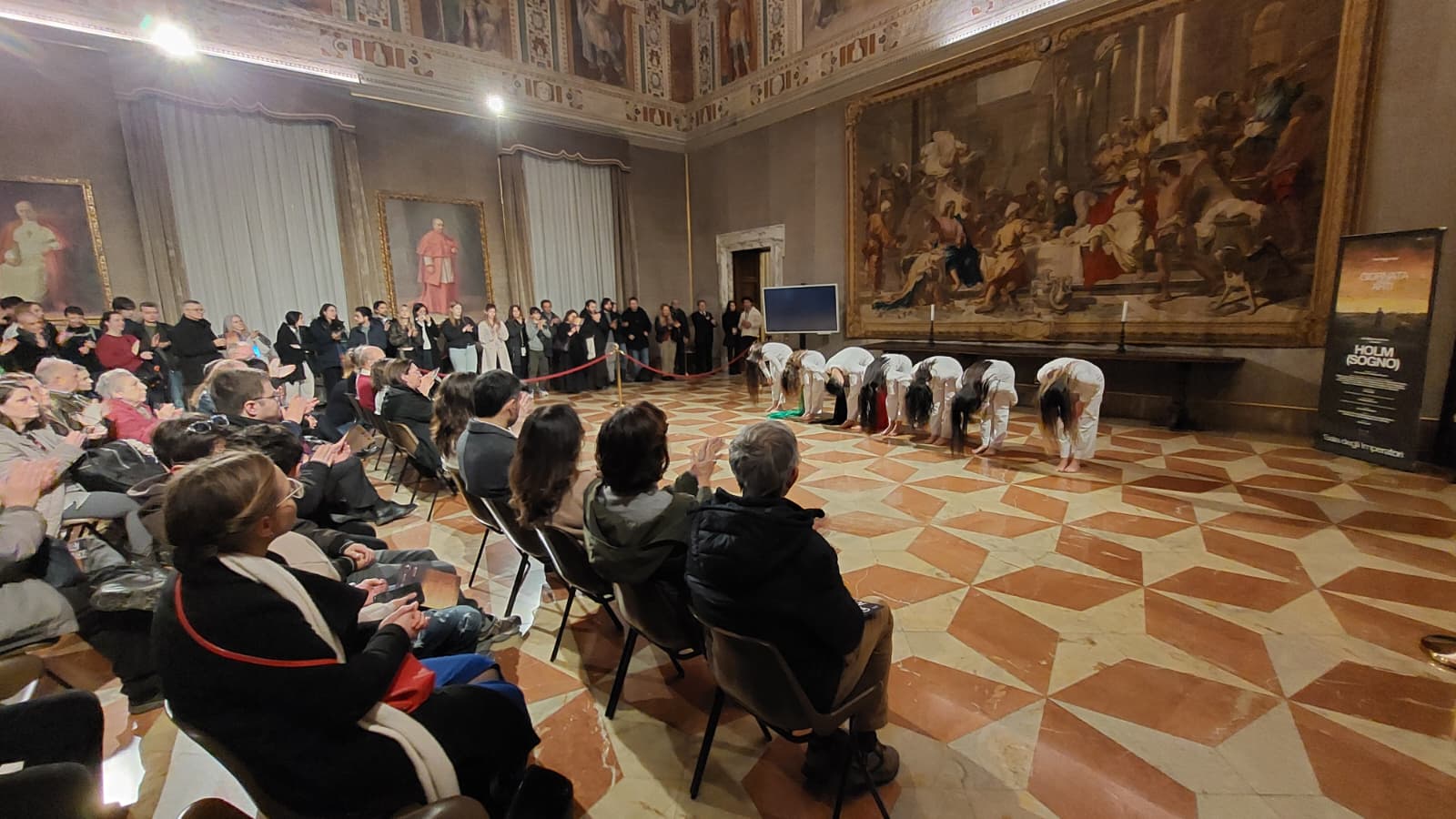
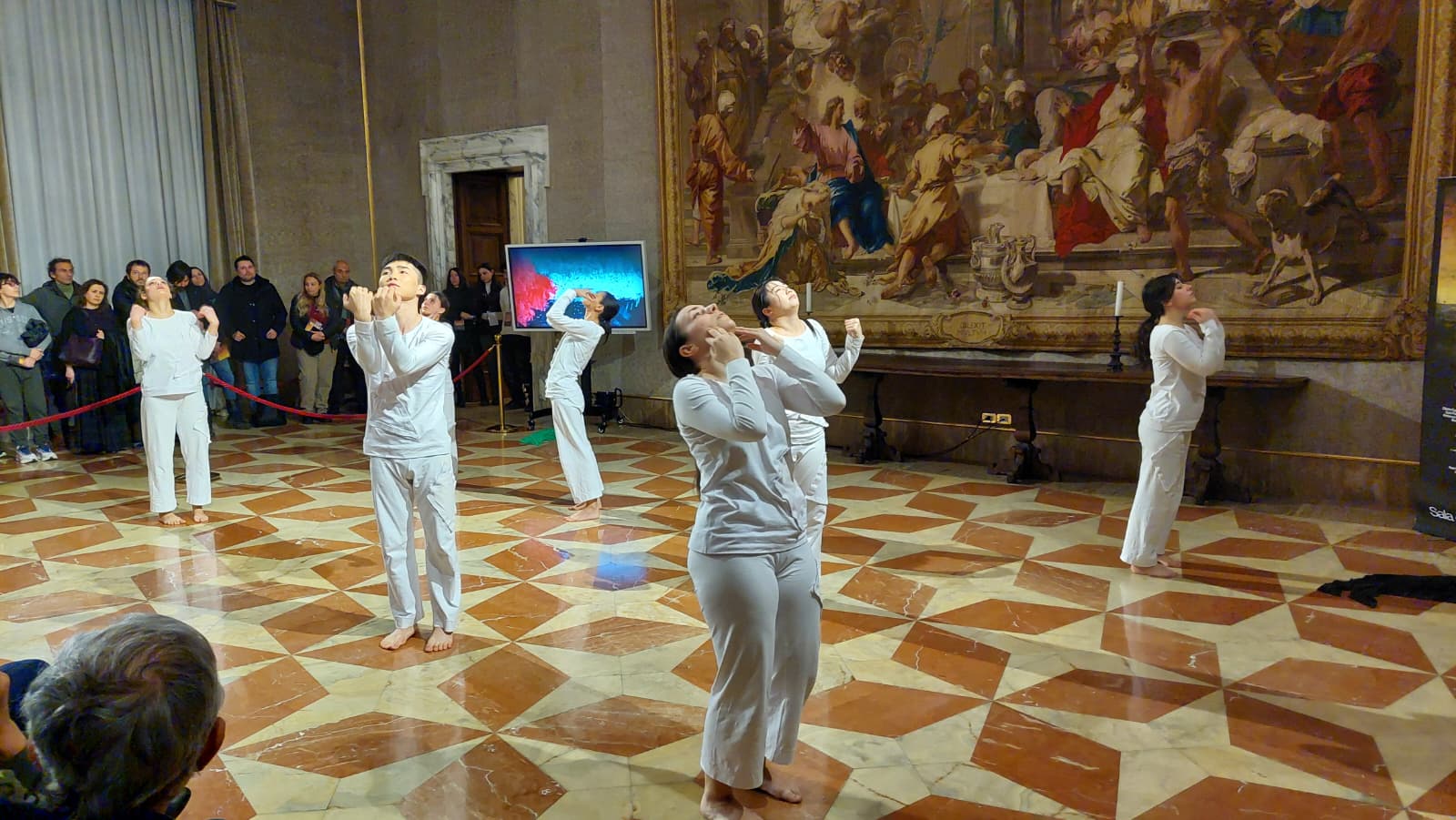
Reflection on the suffering of Gaza’s people continued in the “Hall of the Emperors” with the artistic work “Holm” (“Dream”). This project by the National Academy of Dance combined choreography and video. Through the languages of body and image, it opened an intellectual space for reflection on the Palestinian cause, entrusting dance with the task of fostering listening and awareness.
In the Hall of David, “Who Are You? A Beautiful Question,” a work within the relational art movement, directly engaged the audience with the issue. Through words, images, and sounds, it unfolded fragments of memory about what has taken place in the Gaza Strip.
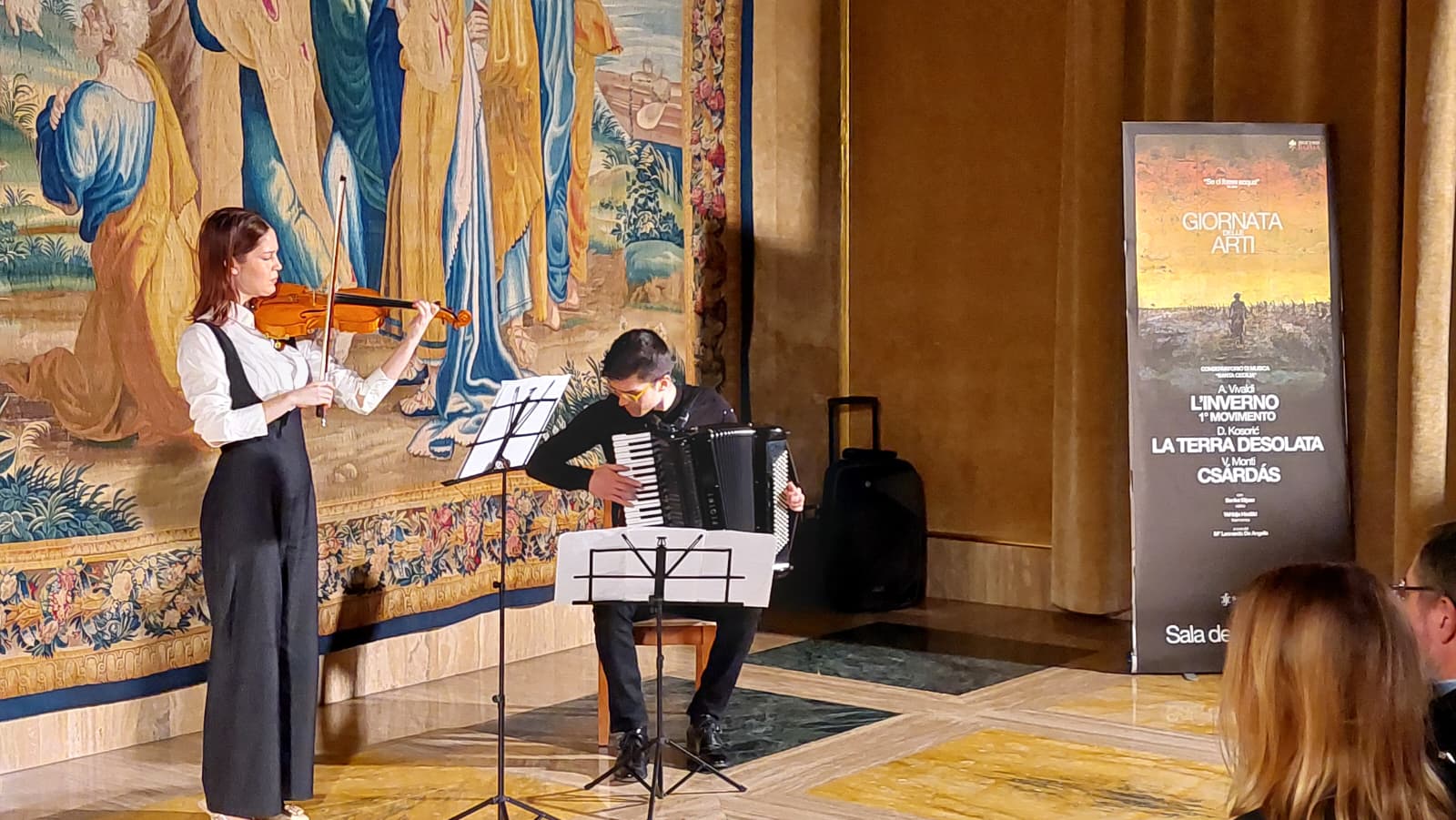
In the Hall of the Apostles, the event hosted the Santa Cecilia Music Institute, with Senka Slipać on the violin and Vehbija Hodžić on the accordion. The musicians performed works by Antonio Vivaldi, Dražan Kosorić, and Vittorio Monti.
The artistic journey at the Lateran also included a work titled “Fire,” a collective installation created within a workshop sponsored by Caritas Rome.