

Catholic Voices for Israel is asking Pope Leo XIV to clarify the Church’s position on Zionism and the modern state of Israel.
In an open letter addressed to Pope Leo on June 22, the group’s co-founders André Villeneuve and Father Antoine Lévy, OP, are asking the Holy Father to answer the question, “Should Catholics interpret the creation and enduring existence of the State of Israel as a sign of God’s providence — or should they not?”

While the pair note that “the Church’s reticence to pronounce on the theological meaning of the State of Israel has served a real purpose,” they proceed to express concerns over “a number of Catholic commentators” who they contend “have interpreted this silence as a formal dismissal of the very possibility of ascribing any theological resonance to the founding of the State of Israel and to its enduring existence.”
“The Church’s silence regarding Israel’s right to exist — the reluctance to go beyond mere political recognition, on a par with that extended to the still inchoate State of Palestine (2013) — gives ground to all those Catholic voices that wish to lend this campaign of denigration the authority of the Church’s own name,” the letter manifests.
Villeneuve and Lévy argue that “the ‘theological silence’ that has prevailed until now would risk doing more harm to the Church’s witness than the prudence it was meant to preserve.”
‘For Zion’s Sake’
Villeneuve and Lévy’s letter to Pope Leo comes as part of an effort by Catholic Voices for Israel to make “a biblically grounded, theologically informed case for Catholic solidarity with Israel.”
In its founding statement, “For Zion’s Sake: A Catholic Appeal in Support of Israel,” the recently formed Catholic Voices for Israel (CVFI) calls for Catholic Zionism to be understood as “supporting the Jewish people’s right to self‑determination in their ancient, biblical homeland; acknowledging God’s love for Zion and his promise of the land in Scripture; recognizing that these promises were never revoked in the New Testament; and remaining open to seeing the work of divine providence in Israel’s return to the land — a possibility the Church has not foreclosed.”
Since launching CVFI last month, “For Zion’s Sake” has garnered 165 signatories, including prominent names such as Gavin DʼCosta of the Pontifical University of St. Thomas Aquinas in Rome.
Addressing the question of his motivation for helping to spearhead the initiative, Villeneuve, an associate professor of Old Testament and biblical languages at Sacred Heart Major Seminary in Detroit, Michigan, told EWTN News that Catholic antisemitism has “become much more prevalent” since Oct. 7, 2023 on two levels: the political level and the theological and biblical level.
“All the prophets consistently reaffirm Godʼs covenant with Israel and his promises that he will return them back to their land. So why arenʼt Catholics taking that seriously?” Villeneuve said. “As if this is just an evangelical, dispensationalist-type of idea, when Scripture is really quite clear about it? These promises and prophecies are never abolished in the New Testament.”
One of the four “Guiding Principles” in CVFI’s Charter asserts the importance of the re-establishment of a Jewish homeland in the modern State of Israel, quoting Pope Benedict XVI who said in a 2018 letter to Rabbi Arie Folger that “it is not difficult, I believe, to see in the creation of the State of Israel the fidelity of God to Israel is revealed in a mysterious way.”
While Villeneuve and the Charter both make the case for a Catholic Zionism and recognition of biblical significance for the modern state of Israel, other Catholic public intellectuals argue that the lack of official teaching leaves room for Catholics to disagree or form alternate opinions.
Indeed, in the same 2018 letter to Rabbi Folger, Benedict XVI says “the state of Israel cannot be seen to theologically represent fulfillment of the Land promise, but rather as a secular state which of course has religious foundations.”
Outside perspectives on the effort
“The Charter is strongest when it grounds itself in truths the Church has clearly affirmed,” Simone Rizkallah, manager of Jewish-Christian Partnerships at the Tikvah Fund, told EWTN News.
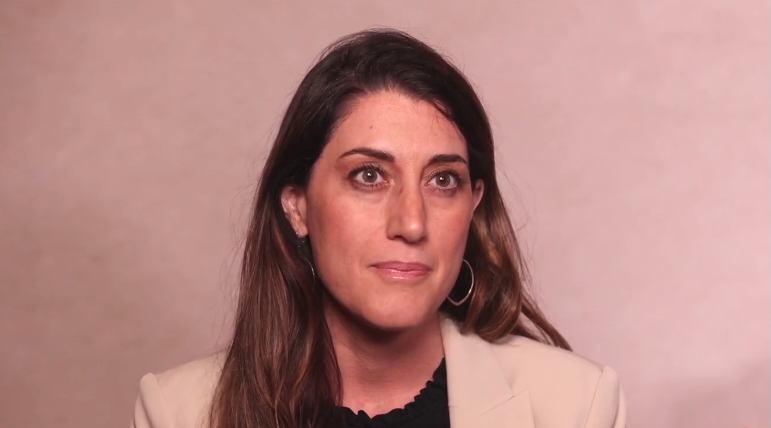
“Where the Charter moves beyond settled doctrine is in its attempt to reflect on the theological significance of the modern State of Israel,” she said, explaining that the Catholic Church has never taught that the modern State of Israel was biblically prophesied, nor rejected the idea that “the re-establishment of a Jewish homeland might bear theological significance in light of Godʼs enduring fidelity to the Jewish people.”
“On these questions there remains room for legitimate theological exploration and debate among Catholics,” Rizkallah, who is not a signatory to the Charter, said.
In addition, Rizkallah pointed to the perspective of Cardinal Pierbattista Pizzaballa, the Latin Patriarch of Jerusalem, in his framing of the issue: “[Pizzaballa] put his finger on an important aspect of the discussion when he observed: “While Europeans primarily view Israel as a state, for Jews it is much more than that.”
“Too often Catholics discuss Israel exclusively as a political entity without adequately appreciating the religious, historical, and covenantal significance that the Land of Israel holds within the Jewish self-understanding,” she said. “Recognizing that reality does not require agreement with every policy of the Israeli government, but it does require taking Jewish self-understanding seriously.”
Rizkallah, who is also a founding member of the Coalition of Catholics Against Antisemitism, said she welcomed the charter’s rejection of dispensationalism, dual-covenant theology, political absolutism, and the notion that Israel should be exempt from moral scrutiny. She further praised the document’s acknowledgement of the dignity and concerns of Palestinians and local Christians.
“One reason I believe this conversation is so important is that, despite the tremendous progress in Catholic-Jewish relations since Nostra Aetate, there are signs that certain anti-Jewish attitudes are reappearing within parts of Catholic discourse,” she said. “I do not mean that large numbers of Catholics are racial antisemites, nor do I mean that the Churchʼs official teaching has changed. On the contrary, the Churchʼs teaching on the Jewish people remains one of the great achievements of the post-conciliar era.”
“The challenge facing Catholics today is not only to reject overt antisemitism, but also to ensure that our theological, political, and moral judgments are shaped by what the Church actually teaches about the Jewish people,” Rizkallah pointed out.
A ‘work of God’
For his part, David Moss, longtime president of the Association of Hebrew Catholics in the U.S., praised CVFI’s initiative.

“I am totally in agreement with this new Catholic initiative in support of Israel,” Moss told EWTN News. “It can only be a work of God that His chosen people, the people Israel (aka the Jews), would survive the holocaust in Christian Europe, and then three years after the end of World War II return to their ancient homeland.”
Moss emphasized that “it is way past time for Catholics to stand up for the Jewish people, the State of Israel, and the many Jewish traditions of Jesus and His people upon which the Catholic faith is based.”