


In a bipartisan letter, federal lawmakers from both the U.S. Senate and House of Representatives urged President Donald Trump to use an upcoming U.S.-China summit to advocate the release of Christian leaders being detained by China’s communist regime.
In the March 24 letter, U.S. Sens. Ted Budd, R-North Carolina, and Tim Kaine, D-Virginia, and Reps. Riley Moore, R-West Virginia, and Thomas Suozzi, D-New York, along with 29 other senators and House members asked Trump to push Chinese President Xi Jinping to release Christian leaders who have been arrested during recent crackdowns on churches not authorized by the communist People’s Republic of China’s (PRC).
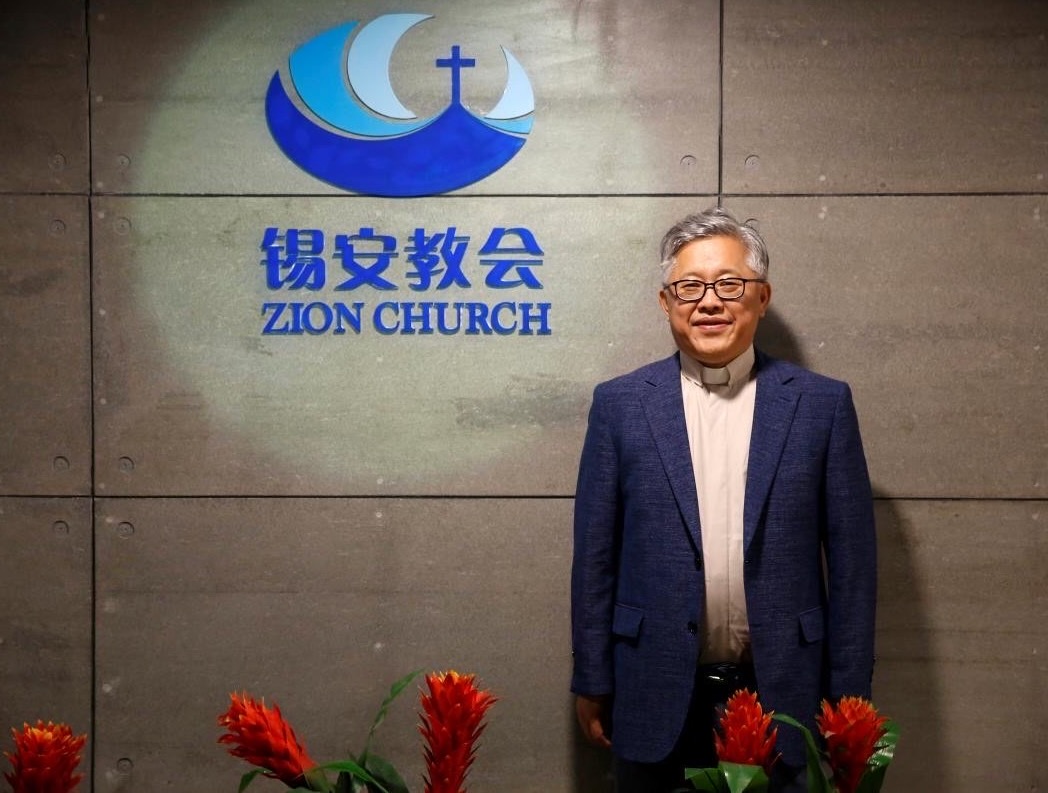
The letter specifically urges Trump to “seek resolution of the case of Ezra Jin Mingri,” founder and head pastor of Zion Church, who was arrested on Oct. 10, 2025, alongside other church leaders. He is still awaiting a trial.
“We encourage you to advocate for their release and request the PRC to allow Mr. Jin to leave China,” the leader reads.
The lawmakers also urged Trump to raise “concerns regarding the ongoing unjust imprisonment and persecution of Christians, Tibetans, and Uyghurs, among other religious and ethnic minority groups across China.”
The letter urges Trump to “utilize existing authorities, including target sanctions and visa restrictions” against those in the communist government “responsible for severe violations of religious freedom.”
The lawmakers listed abuses such as “arbitrary detentions, lengthy prison sentences, forced closures of places of worship, destruction of religious property, and surveillance and intimidation of clergy and congregants.”
“Through the International Religious Freedom Act, the administration is empowered to use targeted sanctions and increase reporting and diplomatic engagement to support your efforts to address severe violations of individuals’ right to freedom of religion,” the letter says.
Jin wanted to ‘let Christ be the center of our church’
Jin, 56, served as an ordained pastor in Beijing’s state-sanctioned Three-Self Patriotic Movement churches from the early 1990s until 2002. In 2002, he moved with his family to the U.S. to pursue a doctoral degree at Fuller Theological Seminary in California.
Two of his three children, all of whom are American citizens, were born during that time, “bucking the one-child policy,” said Grace Jin Drexel, Jin’s oldest child.
After completing his studies, he returned to Beijing in 2007 and, together with a small group of fellow believers, established Zion Church as an independent Protestant congregation.
Drexel, 31, told EWTN News that her father founded the Zion Church as an unregistered “house church” deliberately outside of the authorized channels.
She said her father and the other leaders chose not to register Zion Church because they wanted “to serve God and let Christ be the center of our church.”
China’s religious regulations require all Protestant churches to register with the government and affiliate with the state-controlled patriotic movement. Registered churches must accept government oversight, including approval of pastors, monitoring of sermons, installation of surveillance equipment, and alignment with official “Sinicization” policies that subordinate Christian faith to communist party ideology.
“I wouldn’t say there are no real Christians in government churches,” said Drexel, who grew up in China but now lives outside Washington, D.C., with her husband and children. “But ultimately, it’s a church in captivity. You’re always having to split your loyalty between God and the Communist Party.”
“They were not being political,” she said of her father and the other founders of the underground Zion Church. But after the Regulation of Religious Affairs law started to be enforced in 2018, “the government became less tolerant.”
The Regulations on Religious Affairs is the primary national framework governing religion in China. In 2018, it expanded government powers over all aspects of religious organizations.
Key features require all religious groups, venues, and clergy to register with the government; religious activities must not harm national security, social stability, or ethnic unity, and there is a strong emphasis on preventing “foreign infiltration.”
The patriotic movement for Protestants and the Chinese Catholic Patriotic Association operate under government oversight through the State Administration for Religious Affairs, now under the Chines Communist Party’s United Front Work Department. Unregistered or independent groups, often called “house churches,” operate in a legal gray area or are deemed illegal.
Zion Church began as a small house church meeting in homes or rented spaces. It grew rapidly, reaching about 1,500 members and over 20 pastors by 2018, with its own modern worship space, coffee shop, and bookstore in an office building.
It later expanded into a network of congregations across more than 40 cities in China, with estimates of 5,000-10,000 total participants, including online services.
Though technically illegal under Chinese law, Zion maintained its autonomy for years, until 2018, when the authorities shut down Zion’s main Beijing building after the church refused to install government surveillance cameras in the sanctuary.
Drexel said her father’s personality “isn’t confrontational in general,” so after the government’s shutdown of the church, “he tried to find a middle road and went to a hybrid online/offline model.”
Because of its online presence, the church was already poised to adapt to the COVID-19 pandemic, and it grew quickly at that time because “our church was the only one that had that structure, so instead of disappearing, it blew up,” Drexel said.
She said the persecution that began in earnest in 2018, resulting in her father’s arrest last fall, would have been “unthinkable” in the early 2000s.
“At the time, we in China thought, [after] the cultural revolution, ‘We don’t do that kind of thing in China anymore.’ Now, so many Christians are in prison. It is bizarre that it is happening again.”
Drexel has joined with Claire Lai, daughter of imprisoned publisher and Catholic Jimmy Lai, to advocate for the release of both their fathers and all unjustly detained Chinese citizens.