


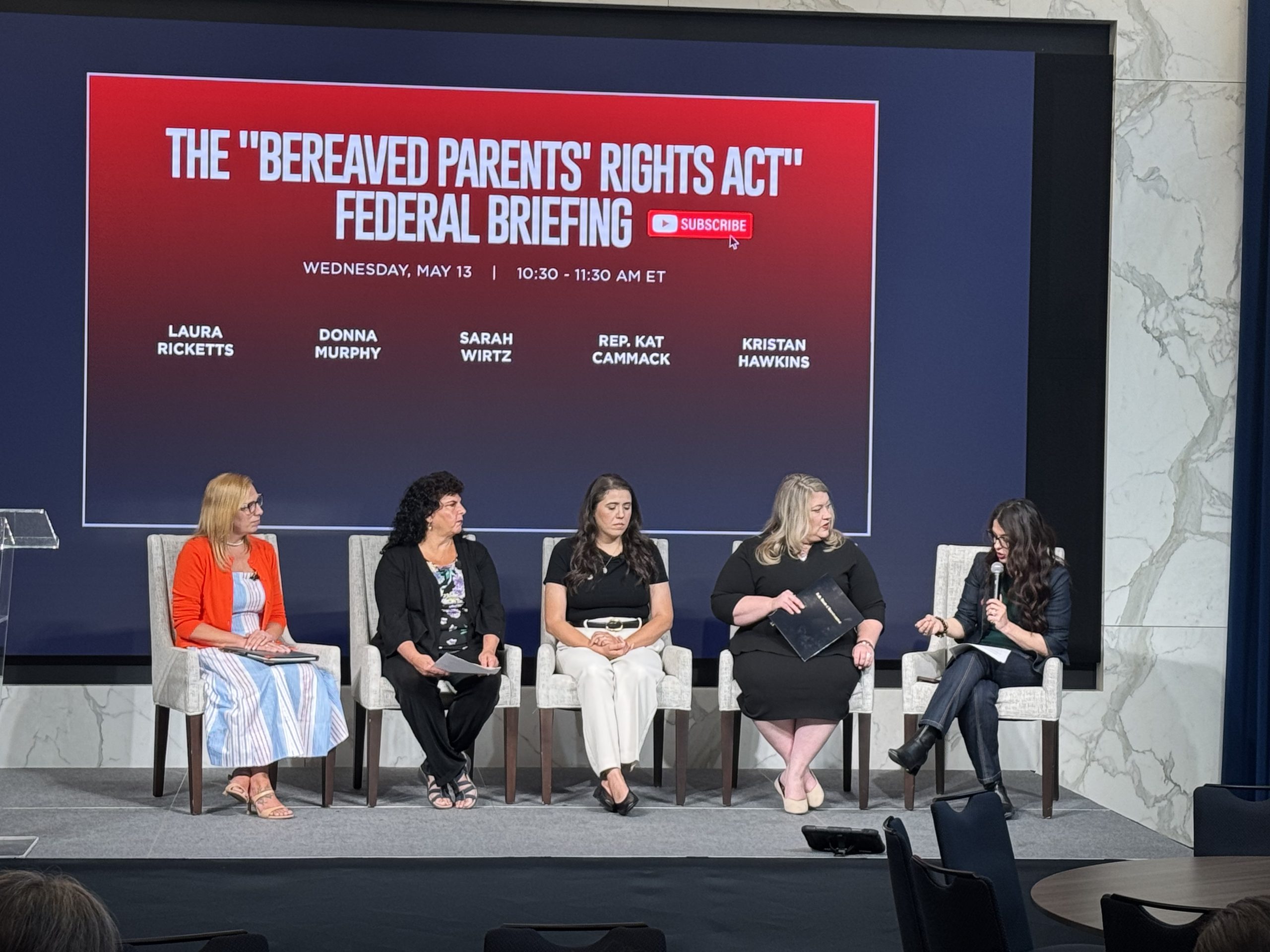
Sen. Roger Marshall, R-Kansas, said he is introducing legislation to ensure hospitals and freestanding birth centers provide clear information about the rights that grieving parents have regarding the cremation or burial of their miscarried or stillborn child.
Marshall, who practiced as an obstetrician-gynecologist for more than 25 years, said he is naming the bill the “Bereaved Parents Rights Act.” Rep. Kat Cammack, R-Florida, who personally suffered an ectopic pregnancy, said she is sponsoring a companion version in the House.
Laws on the handling of fetal remains following a miscarriage or stillbirth vary state to state, and many states have no clear legal requirements regarding the disposition of remains, leaving hospitals to rely on internal policies and procedures, according to Marshall.
Students for Life Action backs the measure and is leading lobbying on Capitol Hill to urge lawmakers to back it, said Kristan Hawkins, the organization’s president.
The legislation would amend Title XVIII of the Social Security Act “to say that the hospital that she is birthing her child into, whether the childʼs born stillborn or miscarried … has to notify the parents no less than six hours after the event or before discharge“ and ”how she can get her babyʼs body to the funeral home to have a funeral if she would like to,” Hawkins said.
A standardized form from the secretary of Health and Human Services would ensure a parent has the right to cremate the child after miscarriage or stillbirth, and it would apply in every state, Hawkins said.
The legislation “is a no-brainer,” Cammack said. “This is very simple in my mind. Any parent who has lost a child needs the space, opportunity, and resources to properly grieve that child.”
To “provide a burial for your child to recover the remains of your child” is “not a partisan issue,” she said. “I believe that is a human issue and something that, if we are serious about honoring life and protecting people, we really do champion and pass this legislation to give closure to so many families around the country.”
Bill sponsors said they have been trying to find a Democratic cosponsor for the bill without success.
“Thereʼs a culture around the issue that doesnʼt allow people to get to the facts. And while you are entitled, certainly, to your own opinion, you are not entitled to your own facts,” Cammack said.
“And the fact is that these are children, these are human beings that have heartbeats, and they deserve the same dignity that a child who was born and has been lost deserves,” she said.
“It should be something very simple that every woman, regardless of where you are in the country, what hospital you find yourself in, is given the exact same rights as a woman who is in a state that values and protects life,” she said.
Personal testimonies
“I see tremendous value in women coming together and reaching across the aisle saying, ‘Weʼve all experienced loss in some form or fashion, whether yourself personally or you know someone who has,’” Cammack said.
A briefing by Students for Life Action on May 13 included numerous personal testimonials from women who have been affected by miscarriage and stillbirth who are urging lawmakers to advance the bill.
Sarah Wirtz said: “I could not go to the hospital. I actually waited three days to go to the hospital because I just was trying to research … if I was going to be allowed to have my son,” she said. “He had passed away, but I still had him inside of me.”
“I knew within at least the medical system, after 20 weeks I was afforded more protection” and “I was absolutely terrified what this meant legally for my baby,” she said.
Wirtz said she was asking: “Would I be given my baby? When I went in to give birth, would they take him from me?”
Wirtz said she risked her own health to spend time finding resources to ensure she was able to keep her sonʼs body. Once she found Heavenʼs Gain Ministries, a Catholic organization that helps families with pregnancy loss, she was told “Youʼre very blessed to be in Ohio,” because state law ensured she had the right to her baby.
“So I went to the hospital, I gave birth to my son Noah, and I was able to bury him,” she said. “But I was also told at the time, if [I] had been in California … I wouldnʼt be afforded the same rights under the law.”
“He would have been deemed as his gestational size, which is under 20 weeks, and I wouldnʼt have been guaranteed right to disposition and … what happened to his body,” she said.
Language of miscarriage
Hawkins also noted the importance of the language when discussing abortion and miscarriage, and ensuring women know the difference and understand the procedures.
“Something we saw in the fall of the Dobbs … was Planned Parenthood intentionally started changing the language around abortion, direct intentional abortion, and they started using the phrase ‘induced miscarriage,’” she said.
“Thatʼs largely because of the invention and the shifting of the abortion industry to the chemical abortion pill, where we know at least 70% of these abortions, that are still killing about a million children a year, are being committed using these pills,” she said.
“The way theyʼre framing these abortions to many young confused women, very scared women, is youʼre just going to ‘induce a miscarriage. Itʼs going to be just like a miscarriage,’” she said.
“We know those are two very different things. And I think apart from the evil of Planned Parenthood killing children and harming women … this is the third greatest evil theyʼve ever committed, which is trying to use the pain and the tragedy of a miscarriage to then justify and try to change the hearts of millions of Americans on their issue, which is the intentional destruction of a human being,” Hawkins said.