
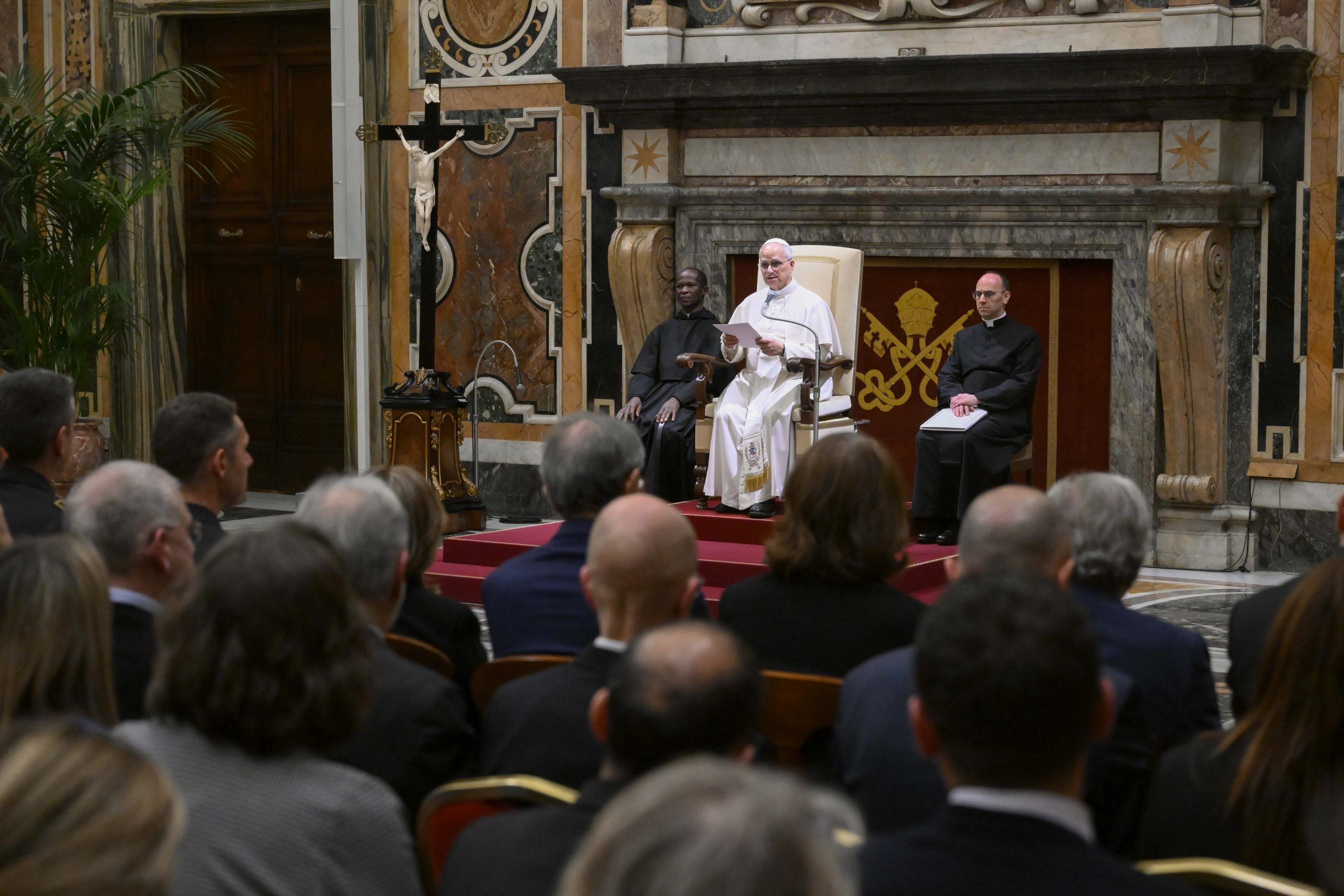
Pope Leo XIV on Thursday said organ donation is a noble act that should be governed by fair and transparent criteria, avoiding “any form of commodification of the human body.”
He also encouraged the safeguarding of the well-being of patients in his comments to participants of an event organized by the Italian National Transplant Network at the Vatican on March 26.
The Holy Father thanked those who serve human life “in its moments of greatest fragility.”
The first donation by Blessed Carlo Gnocchi
In his speech, the pope recalled the first organ donation carried out in Italy, when Blessed Carlo Gnocchi asked for his corneas to be donated after his death.
The pontiff explained that the gesture “sparked widespread reflection within Italian society and helped to set in motion a process of legislative clarification.”
Soon afterward, he noted, Pope Pius XII offered early moral guidance on these questions, “recognizing the legitimacy of removal for therapeutic purposes, respecting the dignity of the human body and the rights of the people involved.”
Leo emphasized that since then, the Church’s reflection has accompanied the development of transplant medicine, “recognizing its value and at the same time setting out the necessary ethical criteria.”
The papal audience with the transplant network took place the same week the Vatican published a document addressing ethical issues connected with xenotransplantation, the use of animal organs in human patients.
A noble and meritorious act
The Holy Father then stated that organ donation is “an act that combines the generosity of giving with the moral responsibility that accompanies it.”
He also recalled that the Catechism of the Catholic Church affirms that “organ donation after death is a noble and meritorious act and is to be encouraged as an expression of generous solidarity.”
For this reason, he warned that “vigilance is always necessary to avoid any form of commodification of the human body and ensure that transplants are governed by fair and transparent criteria.”
Leo also stressed that transplantation medicine highlights how “the relationship of care, trust, and mutual responsibility constitutes an essential condition for a transplant to take place.”
He added that “the very possibility of saving lives through transplants depends, in fact, on the generosity of donors.”
Recalling the teaching of Pope Francis, he emphasized that donation “must remain a gratuitous act, capable of bearing witness to a culture of help, giving, hope, and life.”
Scientific progress and human dignity
At the end of his address, the pope encouraged the development of scientific research, which is “called upon to develop ever more effective solutions to meet the need for organs and the needs of patients, in a context where demand still far exceeds supply.”
He stressed that “it is essential that this commitment always goes hand in hand with responsible reflection, so that scientific progress remains oriented towards the integral good of the person and respect for their dignity.”
Leo thanked members of the Italian National Transplant Network for their “demanding and often unseen” work and urged them to continue “always keeping the well-being of the patient as your guiding principle.”
He also encouraged institutions and volunteers to continue their efforts in information and awareness so that “a culture of donation may grow that is ever more informed, free, and shared, capable of recognizing in this gesture a sign of solidarity, fraternity, and hope.”
This story was first published by ACI Prensa, the Spanish-language sister service of EWTN News. It has been translated and adapted by EWTN News English.