
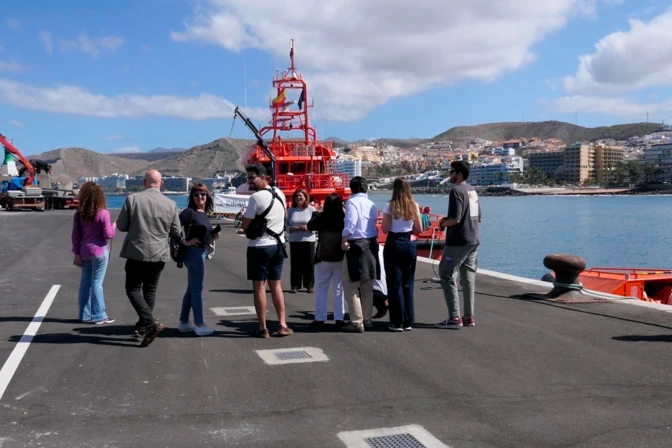
The port of Arguineguín with its pier located on the southern end of the Spanish island of Gran Canaria, where Pope Leo XIV is scheduled to visit on June 11, is at first glance just another port in a fishing town. But itʼs a seemingly nondescript place that in 2020 became the setting for one of the most dramatic episodes of Europe’s migration crisis.
A port transformed into a symbol
For four months, more than 2,600 people — six times the capacity of the pier, which spans a mere 656 ft. — remained crowded together there in inhumane conditions. There were as many people jammed together on the concrete as there were inhabitants in the town that hosted them.
“It was already a very turbulent time, on many levels. Locally, we were right in the middle of the [Covid 19] pandemic, and due to a lack of resources, the food bank had just closed,” recalled Father Adrián Sosa Nuez, who arrived in September 2020 at Our Lady of Sorrows and St. Agatha Parish. Located just a few feet from the port, the parish was where he began to witness the mass arrival of hundreds of “cayucos” — the narrow flat bottom boats that migrants use.
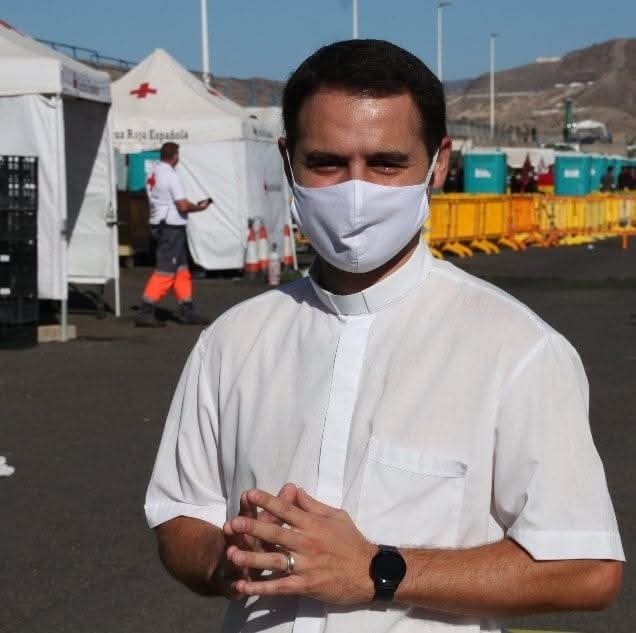
That year, 23,000 migrants and refugees arrived in the Canary Islands, mostly hailing from the Maghreb and sub-Saharan Africa. Fleeing poverty, war, and drought in search of hope, the desperate people of the worldʼs poorest continent cast off into the Atlantic for an extremely perilous voyage.
The island of Gran Canaria lies approximately 95 miles off the northwest coast of Morocco, a distance that in the unseaworthy, open-topped wooden vessels the migrants use, can stretch into voyages lasting up to a week.
The collapse nobody knew how to handle
Although the 2020 figure is lower than the historic record of 46,843 arrivals recorded in 2024, the surge six years ago caught institutions off guard. There were no adequate facilities to receive them, no beds, and no defined strategy to address a situation that, though foreseeable, spiraled into a humanitarian crisis.
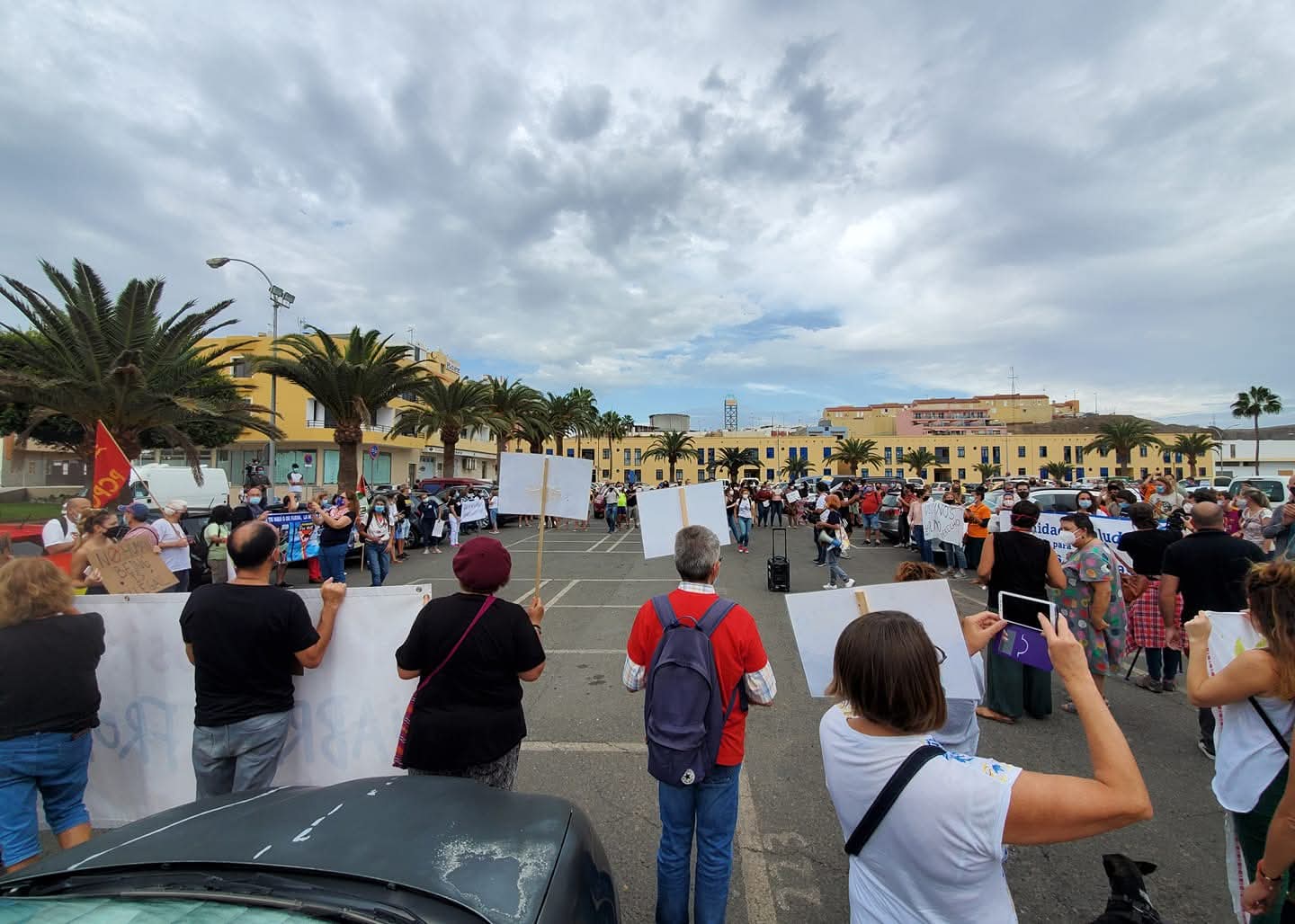
“The impact came as a shock to us not only as a parish, but as the Canarian people. We were unaccustomed to witnessing scenes of this kind, and it caught all the authorities off guard. No one knew how to handle it,” Sosa told ACI Prensa, the Spanish-language sister service of EWTN News.
He is currently a judge on a diocesan tribunal, a professor of canon law, and the parochial vicar in the Siete Palmas neighborhood of Las Palmas, where the pope will celebrate Mass in Gran Canaria Stadium.
Trying to survive in overcrowded conditions
The migrants themselves improvised makeshift shelters using tarps and cardboard. The pier became a place where people slept, ate, and prayed. In real terms, each person had little more than one square yard of space.
Arguineguín thus came to symbolize a triple failure: that of the migrant reception system, that of respect for human rights, and, ultimately, that of human dignity. Added to this were restrictions imposed because of the pandemic.
“We were unable to be at the pier due to Covid protocols, so we could only provide help at a later stage,” explained the priest. Around twenty hotels on the island then opened their doors to accommodate the migrants. “That was when we began to put a human face to their suffering and to accompany them,” he said.
The response of the Church and society
Volunteers from the parish and from Caritas mobilized to offer Spanish classes. Some even welcomed migrants into their own homes. Sosa himself gave shelter to a young man in the rectory after the young man was left out of the reception system.
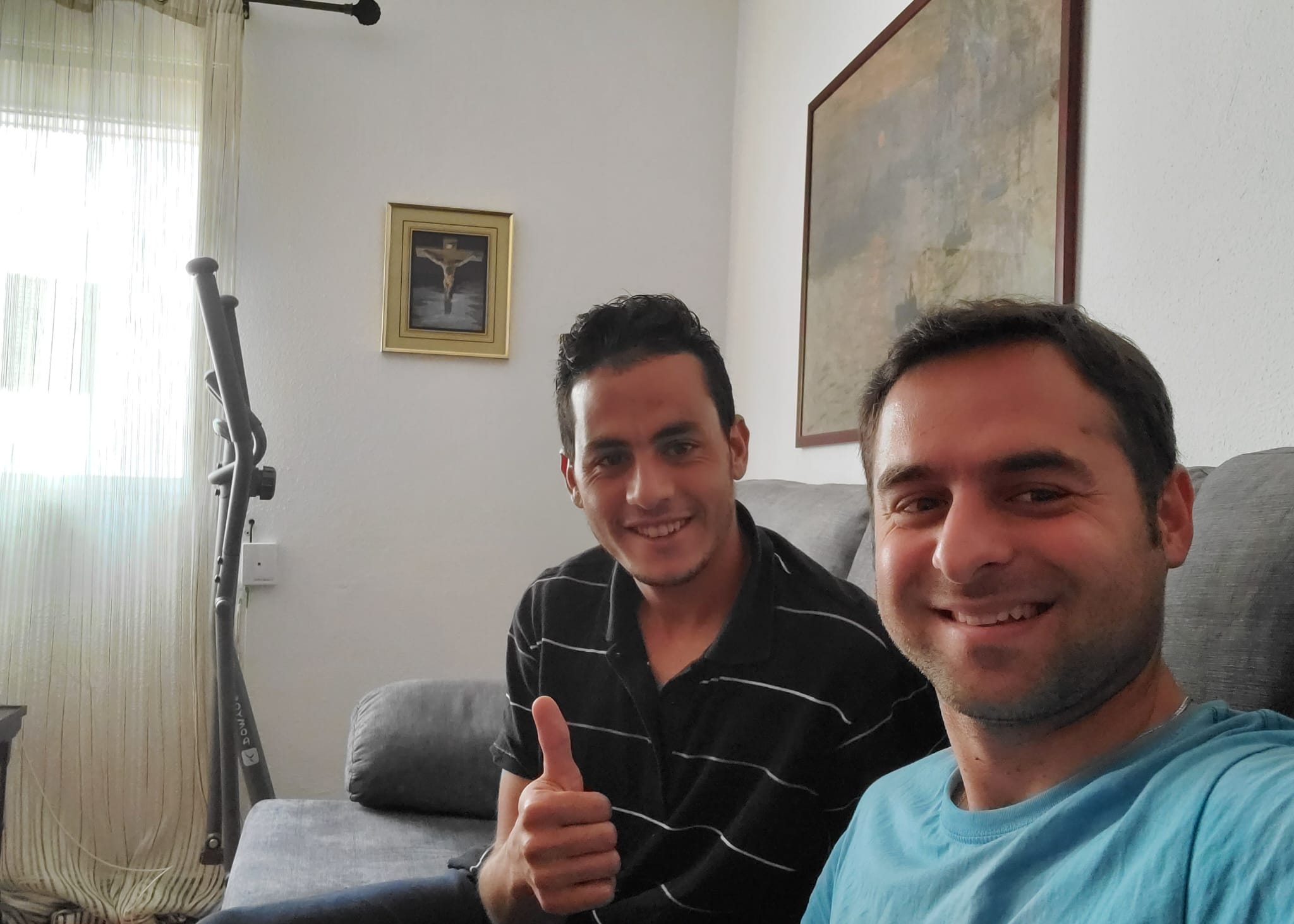
“Pope Francis had recently published Fratelli Tutti, and it was truly providential. It helped us greatly in raising awareness across all social strata that, as Christians, not everything is negotiable and that we had a duty to help these people,” he explained.
The crisis also fostered collaboration among various ecclesial organizations. Among others, Sosa received calls from Father Ángel, founder and president of the NGO Messengers of Peace, inquiring about their needs, as well as from the evangelical church Misión Moderna.
“Despite the difficulties, it was a time of great joy, a time of feeling in communion with the entire Church,” he recalled.
Along the edges of the pier in those days, family members also gathered in search of news regarding their loved ones. They arrived bearing photographs, asking survivors if they had seen them. “Many arrived traumatized. If someone fell ill during the crossing, in many cases they were thrown into the sea,” Sosa recounted.
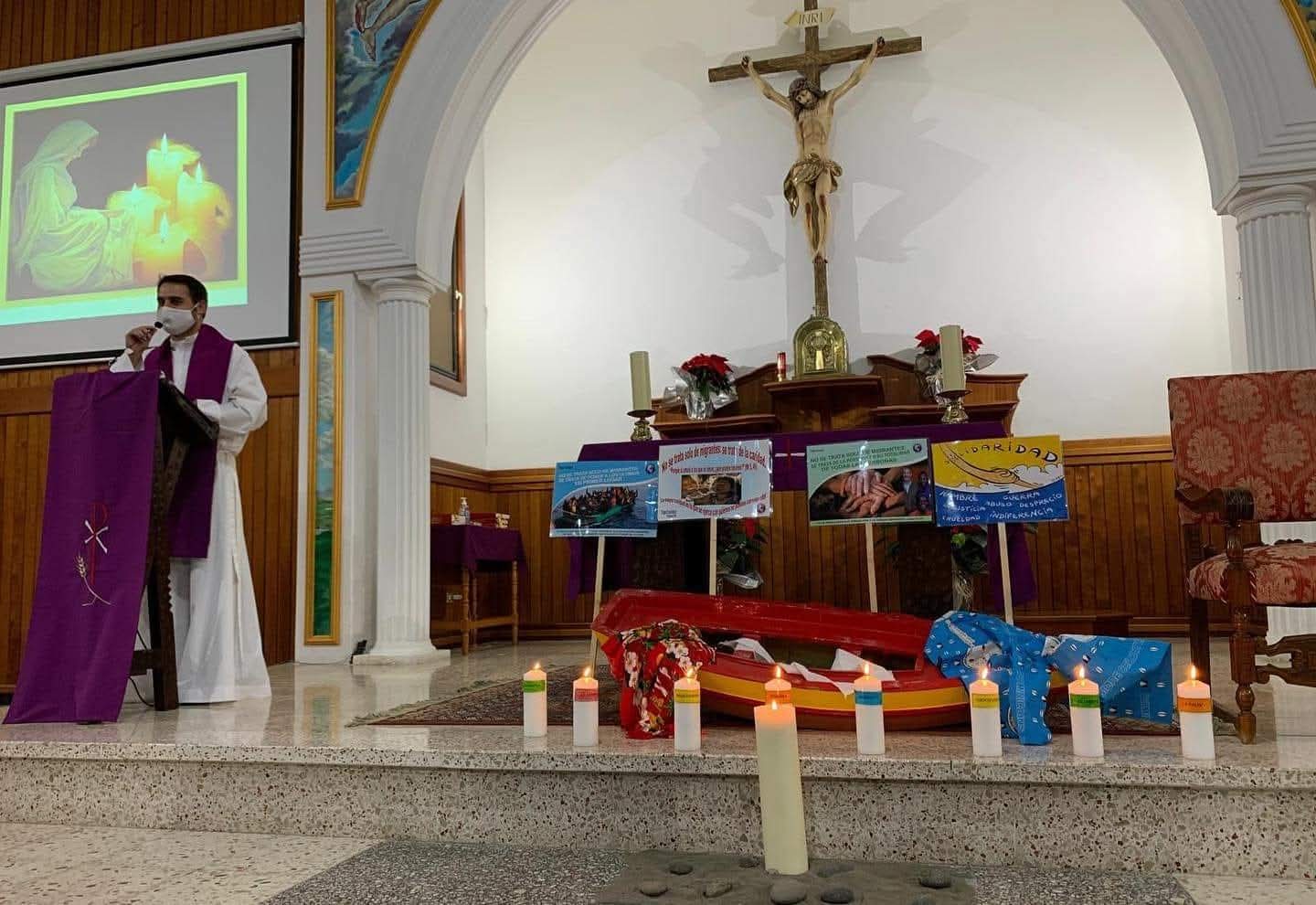
In the words of the priest, it was “a major traumatic experience.” Since 2020, more than 19,000 people have died attempting to reach the Canary Islands, victims of the cold, the currents, and a journey spanning hundreds of miles, depending on the point of departure.
In 2025 alone, of the more than 3,000 people who perished on maritime routes, 1,906 lost their lives on the Atlantic route to Europe as documented in the 2025 Monitoring the Right to Life report by the NGO Caminando Fronteras (Walking the Borders).
Pope coming to the ‘pier of shame’
Six years later, the pope will visit this site, now known as the “pier of shame.” Nearly 2,000 people will await him there, the very place where many first set foot in European territory under extreme conditions. Moreover, this visit fulfills a wish that his predecessor, Pope Francis, was unable to realize.
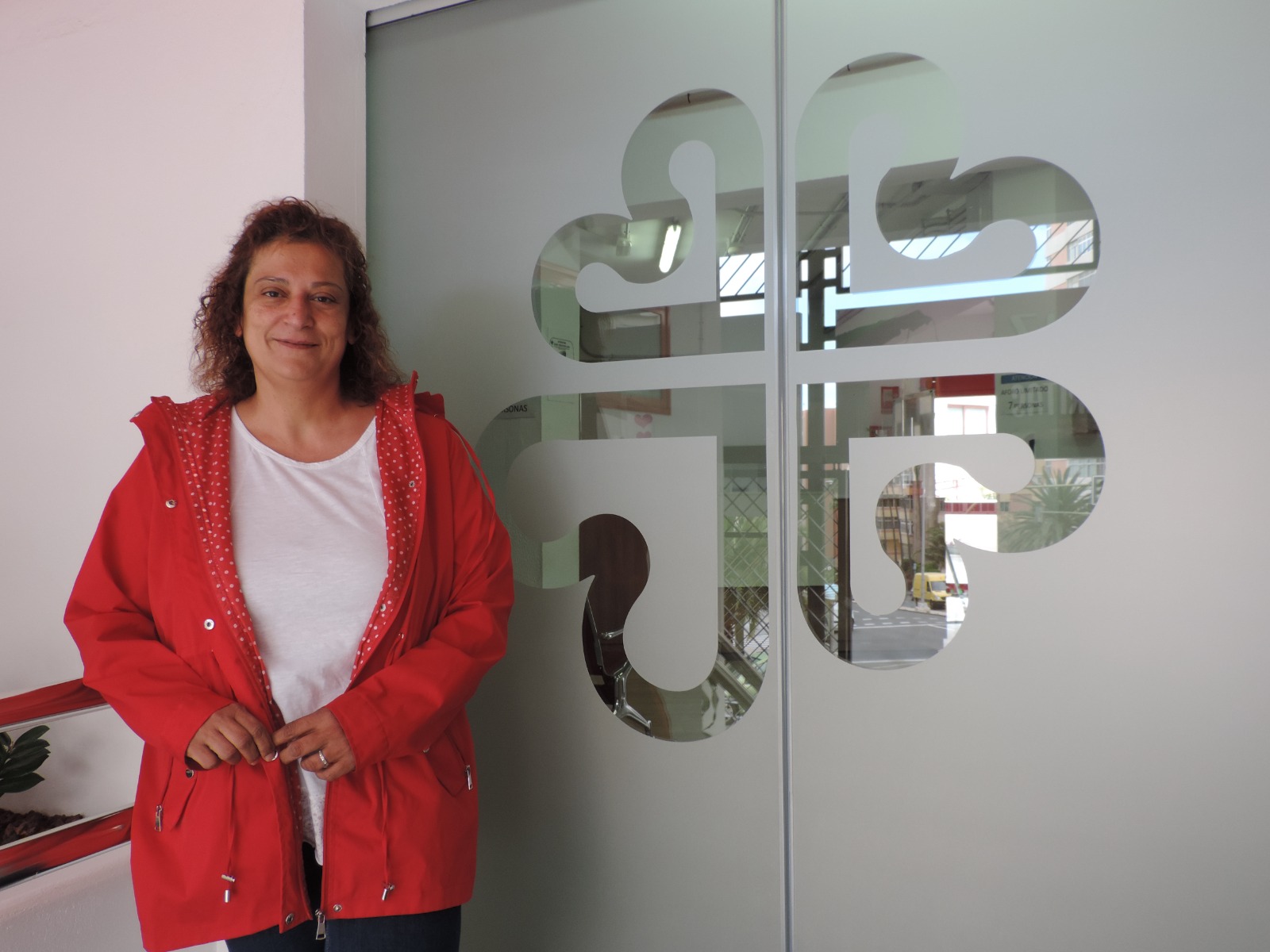
“Many of those who will be with the pope have experienced the grueling Atlantic route. A great many have left friends or acquaintances behind at the bottom of the sea,” explained Caya Suárez, a social worker, secretary general of Caritas in the Diocese of the Canary Islands, and coordinator of the event.
One of the most moving moments will be the casting of a floral wreath into the sea in memory of the victims, echoing the gesture performed by Pope Francis in the Sicilian island of Lampedusa. Alongside Pope Leo, a human chain will be formed by people who “wish to remember those they have seen die.”
The pope will listen to the testimonies of four migrants, who will recount not only the hardships of their journey and the stigmatization they endured, but also how Caritas and other ecclesial organizations have become a new family to them.
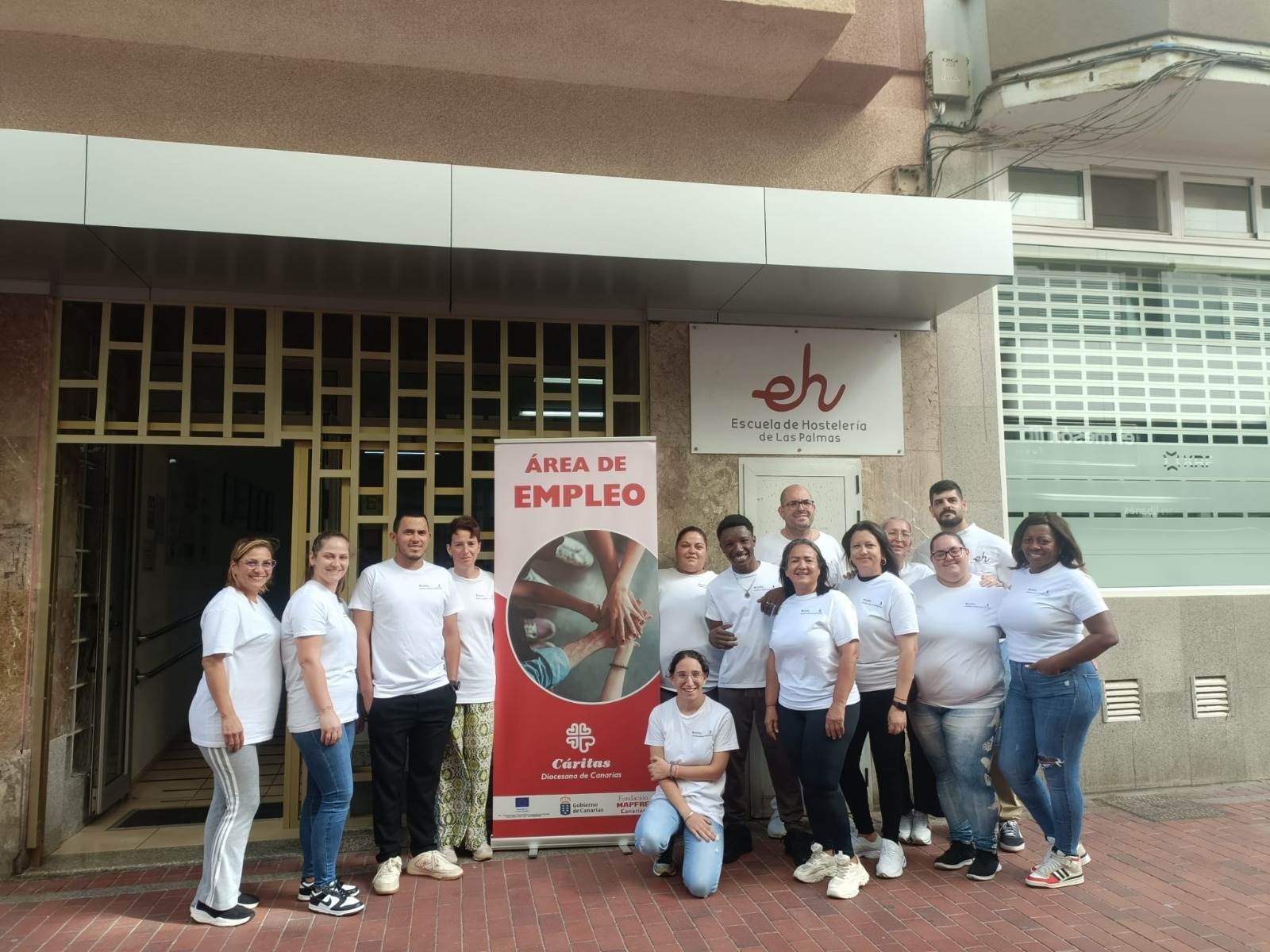
In Las Palmas province alone, Caritas has assisted more than 22,000 migrants of African and Latin American origin since 2020. Since 2024, the Caritas Española confederated network has launched 47 diocesan projects dedicated to welcoming and supporting undocumented individuals.
“Caritas steps in when people, regrettably, find themselves outside the system, when government assistance fails to reach them,” Suárez explained.
A cross made from cayuco wood
Another significant moment will be the blessing of an image of Our Lady of Mt. Carmel, the patroness of sailors. A small altar dedicated to her image, which is deeply rooted in local fishing traditions, is kept on the pier. On numerous occasions, sailors have been the first to go out to rescue incoming vessels.
Alongside this altar will be a cross crafted from the wood of a migrant boat, a cross that has already become a symbol of the local Church. At the conclusion of the ceremony, the pope will bless both the cross and the image of the Virgin, which will remain on the pier.
This story was first published by ACI Prensa, the Spanish-language sister service of EWTN News. It has been translated and adapted by EWTN News English.