
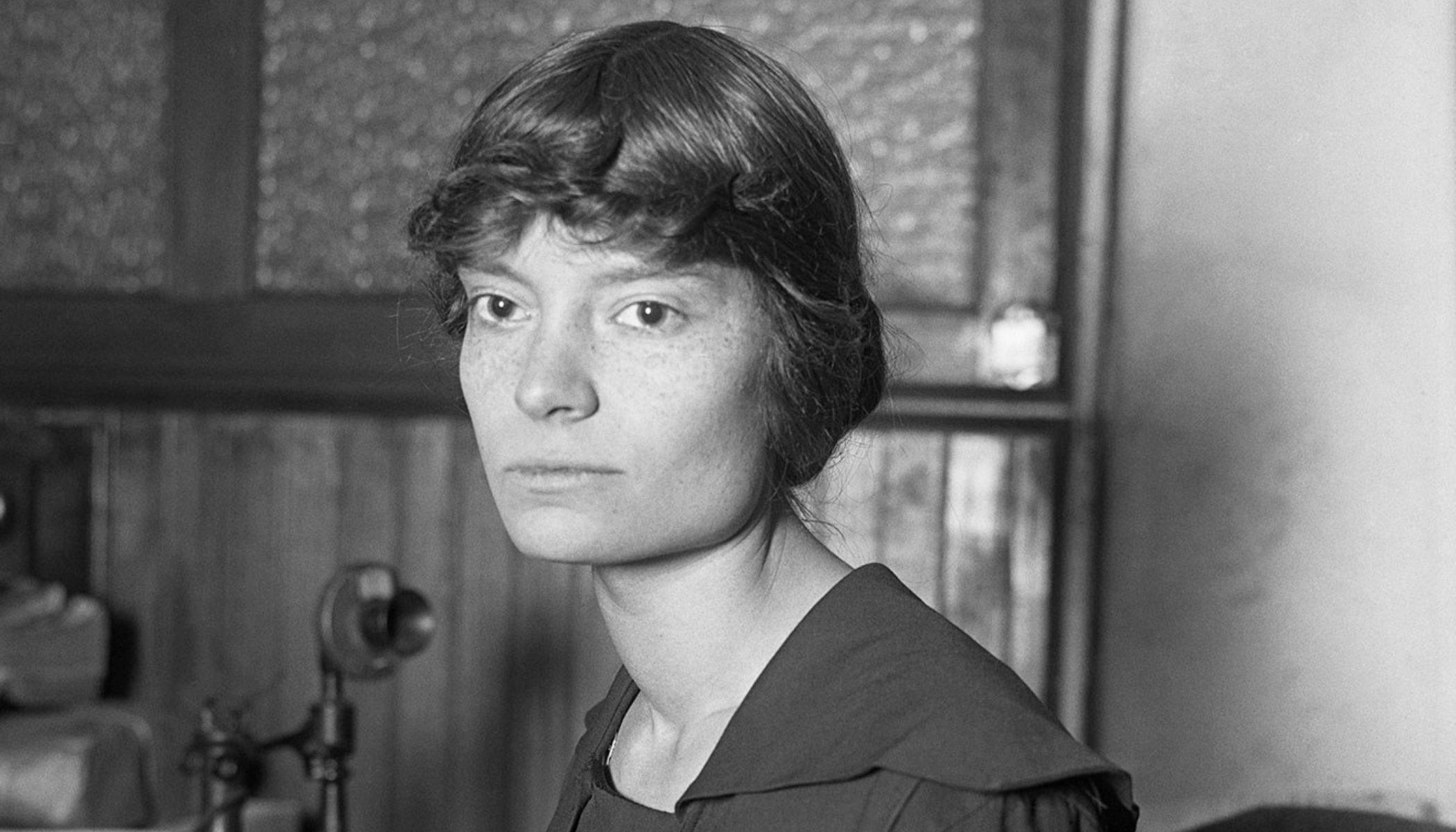
A street corner in Brooklyn, New York, is now honoring Catholic social activist and journalist Servant of God Dorothy Day.
The intersection of Pineapple and Henry streets in Brooklyn Heights was renamed to “Dorothy Day Way” on May 2. Day was born nearby at 71 Pineapple St. in 1897.
Martha Hennessy, Day’s granddaughter, and members of the Dorothy Day Guild attended the ceremony unveiling the new street sign.
Hennessy called the ceremony “a beautiful moment” in an interview with The Tablet.
Alex Avitabile, a member of the guild, spearheaded the campaign to honor her by changing the street name. He recalled meeting her in 1970 after a talk she gave at the Catholic Worker House in Rochester, New York, saying he recognized that he was in the presence of a holy person.
“I knew,” Avitabile shared. “She had a way about her — her eyes. There are a few people I’ve met who are saintly people. And I could just see that.”
Kevin Ahern, board chairman of the guild, also attended the unveiling ceremony and said he believes the new street name can be an evangelization tool.
“By learning about her,“ he said, people ”can be inspired by her to live their life a little bit different and make the world a better place.”
“I truly believe that she will bring so much good to the Catholic Church and bring people back to the Church,” Hennessy said.
Her cause for canonization opened in 2000, and she is now recognized as a servant of God, the first step in the process toward possible sainthood.
Born in Brooklyn and raised in Chicago, Day was baptized Episcopalian at the age of 12. From a young age she showed signs of caring deeply about religion and justice.
As a young woman, she was shaped by the social upheavals of the 1910s and influenced by works like Upton Sinclairʼs book “The Jungle,” which exposed the harsh realities of industrial labor. She left college and moved to New York, working as a reporter for a socialist newspaper and immersing herself in radical political and artistic circles, including a relationship with anarchist Forster Batterham.
In the 1920s, Day settled on Staten Island, where she raised her daughter, Tamar, and gradually deepened her spiritual life. Drawn to Catholicism, she began praying regularly and had her daughter baptized before entering the Catholic Church herself in 1927.
After becoming a single mother, her concern for the poor took on new urgency. In 1933, she partnered with Peter Maurin to launch the Catholic Worker Movement, combining direct service with a radical commitment to living out the Gospel through voluntary poverty.
Through the movement, Day helped establish houses of hospitality, soup kitchens, and farming communities, serving those in need throughout the Great Depression and beyond. A lifelong pacifist, she spoke out against war, including the Vietnam War, and supported labor rights and civil rights efforts. Day never took a salary for her work and remained committed to serving the marginalized for decades.
She died in 1990 and her legacy continues through Catholic Worker communities worldwide.