
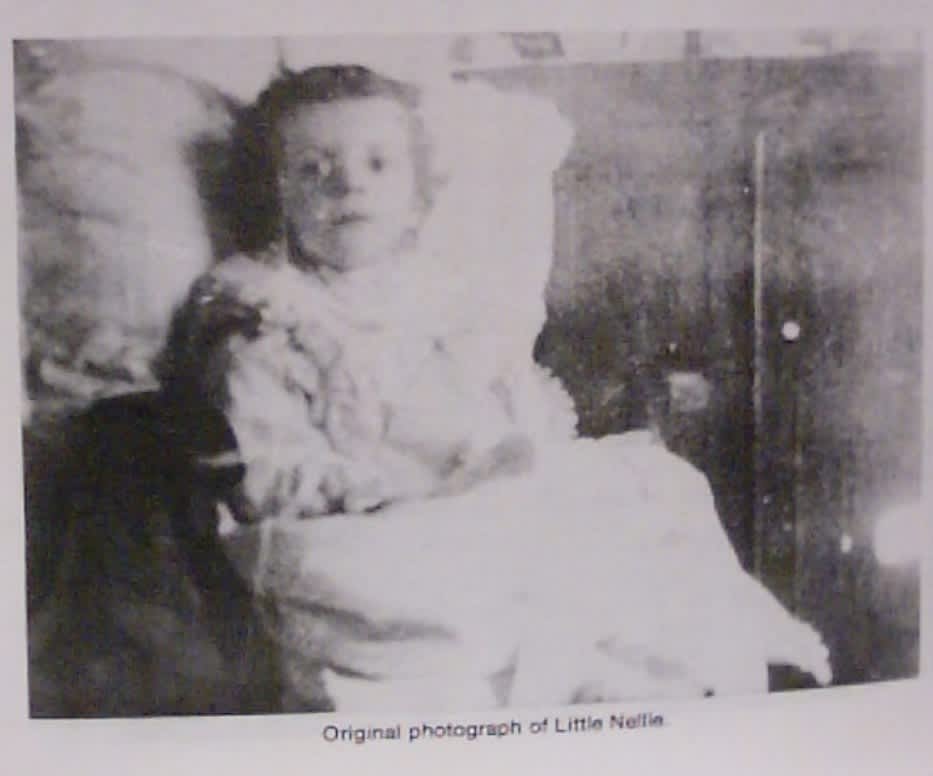
Nellie Organ — affectionately known as “Little Nellie” — was a 4-year-old child from Cork, Ireland, whose piety and closeness to God led in part to the lowering of the age at which children could receive their first holy Communion.
In 1910, a decree was promulgated by the Sacred Congregation of the Discipline of the Sacraments under Pope Pius X on the subject. Quam Singulari states: “The age of discretion, both for confession and for holy Communion, is the time when a child begins to reason, that is about the seventh year, more or less. From that time on begins the obligation of fulfilling the precept of both confession and Communion.”
One of the pope’s intentions of the decree was to encourage frequent, even daily, Communion among all the faithful, starting from a young age. It was a transformative moment for the Catholic Church.
According to John Donovan from the Little Nellie of Holy God Foundation, a factor that helped convince Pope Pius about this was the story of Little Nellie, whose virtue and intense relationship with God, up until her death at the age of 4 1/2, astonished the Good Shepherd sisters who cared for her as well as the priests and the local bishop of Cork.
An unwavering desire to receive ‘Holy God’
From an early age, Little Nellie exhibited signs of a deep spirituality to her parents. Her experiences included visions of Jesus and Mary as well as intense reverie in the presence of the Eucharist.
Although the little girl was not named in the decree, her faith and longing for the Eucharist resonated deeply within the Church and were mentioned by Pope Pius on several occasions.
Little Nellie captured the hearts of many with her unwavering devotion to Christ and her story spread widely, illustrating that children could possess a genuine faith and desire for Communion irrespective of their age.
Pope Pius X’s decree emphasized that a basic understanding and reverence were sufficient for children to receive Communion, rejecting the notion that advanced theological knowledge was necessary.
Donovan told EWTN News: “Nellie’s story is very much a story of the Eucharist. The essence, I guess, of why we are here years later talking about her and why she has been known for all of that time is that Nellie received the Blessed Sacrament at the very young age of just 4 years old. And that is something that was unheard of at the time.”
“Nelly had a tough time. She died of tuberculosis, which she had contracted from her mother, Mary, who died not too long previously,” Donovan explained. “She died in an orphanage in the Good Shepherd convent in Sunday’s Well in Cork. She was placed there, along with her sister Mary, and there were also two brothers who were sent to other religious institutions because, at that time, her father William was in the army. While there, she was frail from the start. But the one thing she never asked at all, or questioned at all, was Jesus, or as she preferred to refer to him, ‘Holy God.’”
For Nellie, the Child of Prague statue was an image of Holy God. Donovan explained: “She related to Jesus and had a personal relationship with Jesus as ‘Holy God.’ From the age of 3 onwards, she was asking and beseeching to be allowed to receive holy Communion. Even at that young age, she was offering up all of this suffering. She said, ‘You know, Jesus, my suffering is nothing to what you suffered on the cross for me.’”
Development of Communion guidelines
Before Pius X’s decree, the Catholic Church had adopted increasingly strict guidelines regarding first Communion — primarily influenced by two significant factors: In the wake of the Protestant Reformation, the Church sought to underscore the sacredness of the Eucharist, resulting in a more cautious approach. Church leaders preferred that individuals receive Communion less frequently but with greater worthiness.
Additionally, Jansenism affected the age at which children could receive Communion. Children were often required to demonstrate an adult-like understanding and moral seriousness, pushing the age of first Communion to 10 to 12 years.
Donovan told EWTN News: “Little Nellie’s spirituality was cradled in her mother’s bed, and because her mother was [sick] for a lot of that time, Nellie was in the bed with her, and it was there she learned the rosary and her prayers, and she prayed to Holy God from a very young age.”
Remarkably, Nellie could sense when Christ was not in the tabernacle. And if someone had visited her after receiving Communion, she could sense the presence of Christ. Knowing the person had recently been to Communion, often kissing them to be close to her Holy God.
The young girl became a symbol of innocence and spiritual intuition, reinforcing the idea that holiness transcends age and education. The long-term effects of Quam Singulari reshaped Catholic life worldwide, making first Communion a regular part of early childhood and fostering a more pastoral approach to religious education.
Such was her deep understanding and desire for the Eucharist that it repeatedly impressed the Good Shepherd religious sisters. During a convent retreat, a Jesuit priest from Dublin named Father Bury met Nellie and spoke with her extensively to gauge her understanding and devotion.
“He was impressed immensely, and she gave deep answers to questions in terms of her understanding of the Real Presence. And so he heard her first confession,” Donovan said.
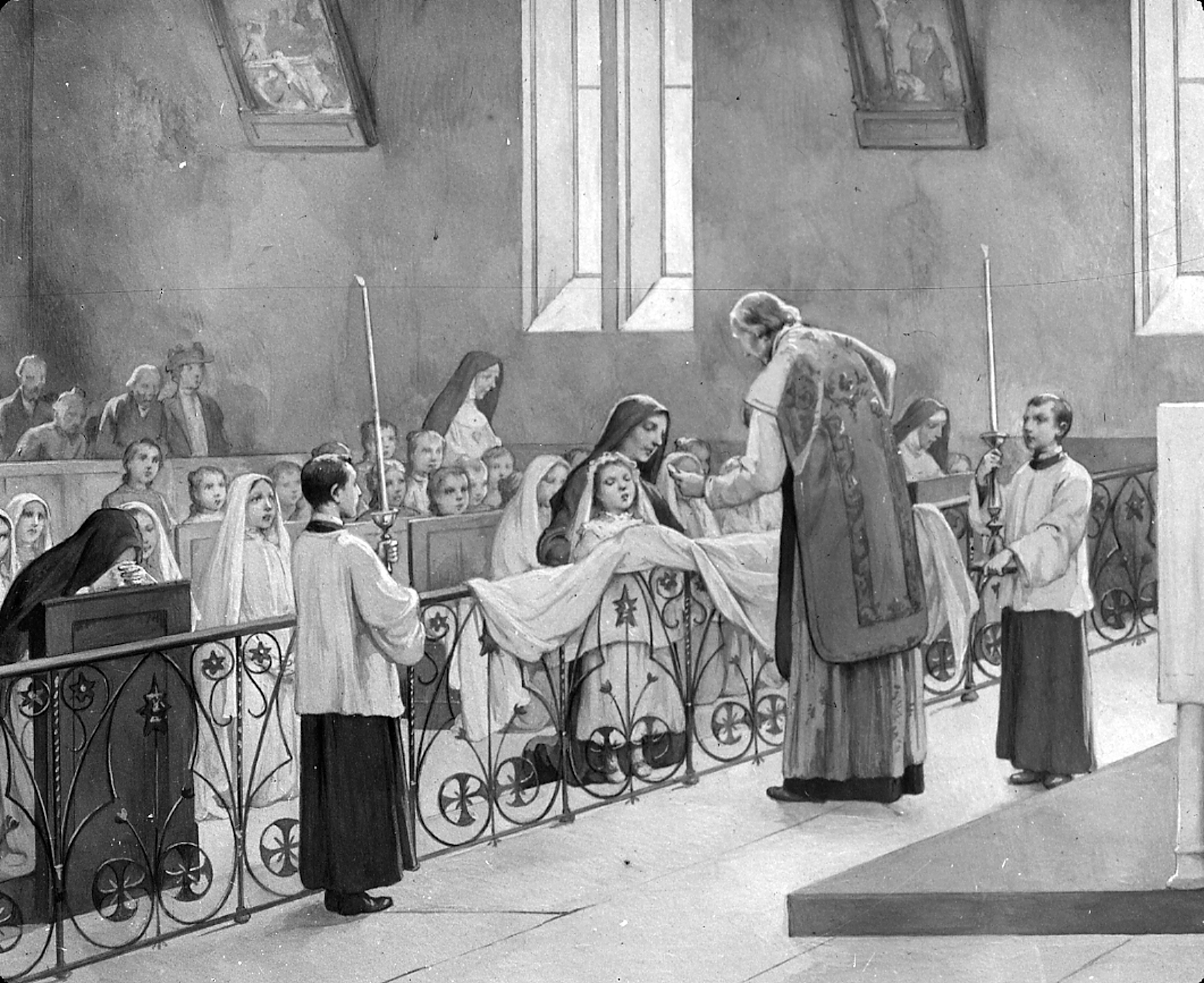
Bury wrote to the bishop of Cork, Thomas O’Callaghan, stating that Nellie was endowed to an extraordinary degree with ardent love of God and the desire to be united to him in holy Communion. As a result, episcopal consent was given for Nellie to receive her first Communion on Dec. 6, 1907. Her joy at receiving “Holy God” was immense.
Not too long after Nellie’s death, accounts of her life began to appear, including one by Dean Scanlan, published in Roma, an Italian journal.
Donovan explained: “It is recorded that Pope Pius X was at his desk one day, and this account of little Nellie’s life came in front of him. He read it with great interest, and he is recorded as saying to Cardinal Merry del Val: ‘There, there it is, that is the sign for which I have been waiting.’”