
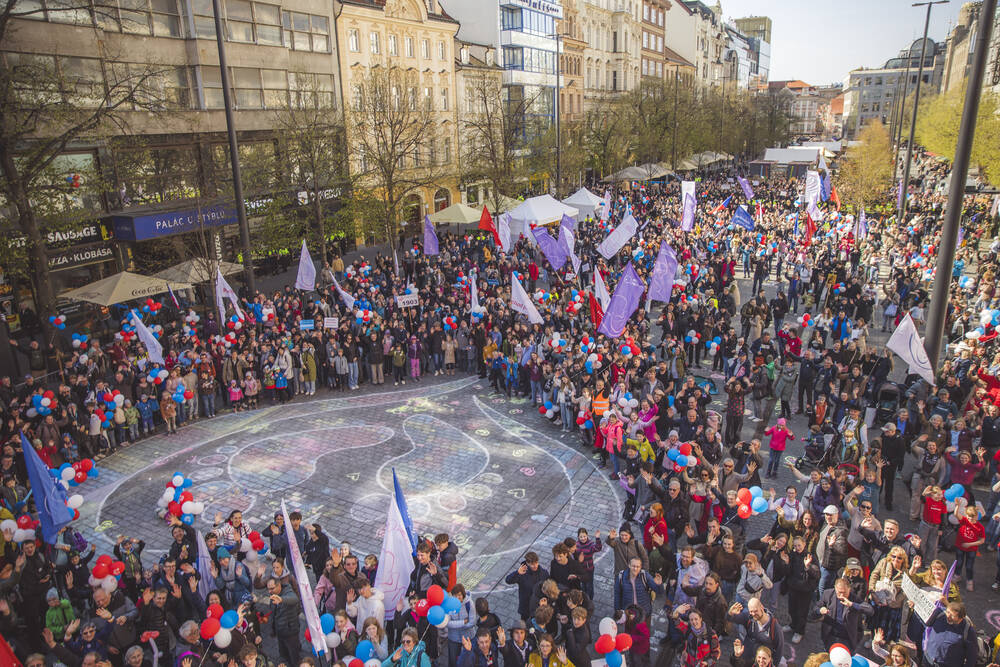
PRAGUE, Czech Republic — Thousands of pro-life marchers filled the streets of Prague on Saturday, April 11, for the Czech Republicʼs annual March for Life, though organizers say police restrictions on crowd access to the eventʼs main gathering point significantly depressed turnout.
The event began with a Mass in St. Vitus Cathedral, where around 2,000 people gathered before joining the pro-life march. Archbishop Emeritus Jan Graubner of Prague said in his homily that “the path to the revival of the Church and society is not possible without the revival of families.”
Graubner praised a culture based on love, “which does not live for itself,” on the acceptance of the Holy Spirit, interior freedom, and forgiveness.
Some resist this culture, Graubner acknowledged, saying that they “consider their own self to be the center and summit of everything.” Such a perspective “encloses in bubbles and creates boundaries,” he said, adding that it also “causes poverty because there is a lack of love that can divide.”
It “threatens peace because there is a lack of love that seeks the good of others,” he continued. Finally, it “leads to depression because there is a lack of hope for eternity and the disappointed person experiences” that “he is not the omnipotent god he had” thought, Graubner concluded.
Counterprotesters and police response
Pro-abortion protesters attempted to block the marchers, screaming and accusing them of denying women the right to choose. Police arrested five people, but no serious incident occurred. Last year, pro-abortion demonstrators blocked the march at one point, so this time participants walked through the city in separate groups to avoid a repeat disruption.
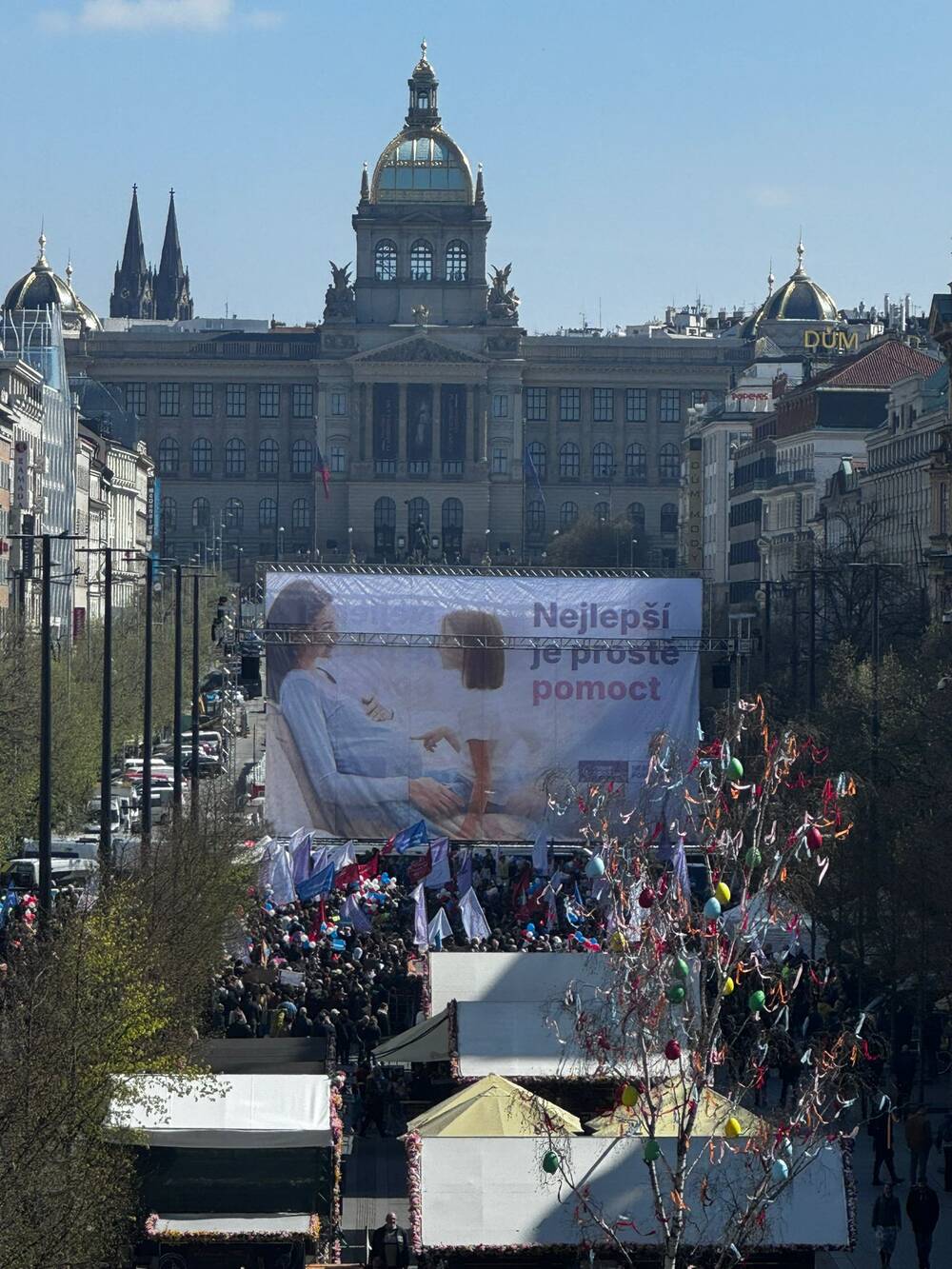
Typically, the number of marchers doubles once they reach Wenceslas Square (Václavské náměstí), one of the cityʼs main squares, where the programʼs final portion takes place. This year, however, police blocked the square and allowed entry only to those who insisted on getting in — a barrier that was especially difficult for families with small children. As a result, the total number of participants was hard to estimate, and the turnout in Wenceslas Square was much lower than expected.
The organizer, Hnutí Pro život ČR (Movement for Life of the Czech Republic), told EWTN News that it is considering a legal complaint against the police department.
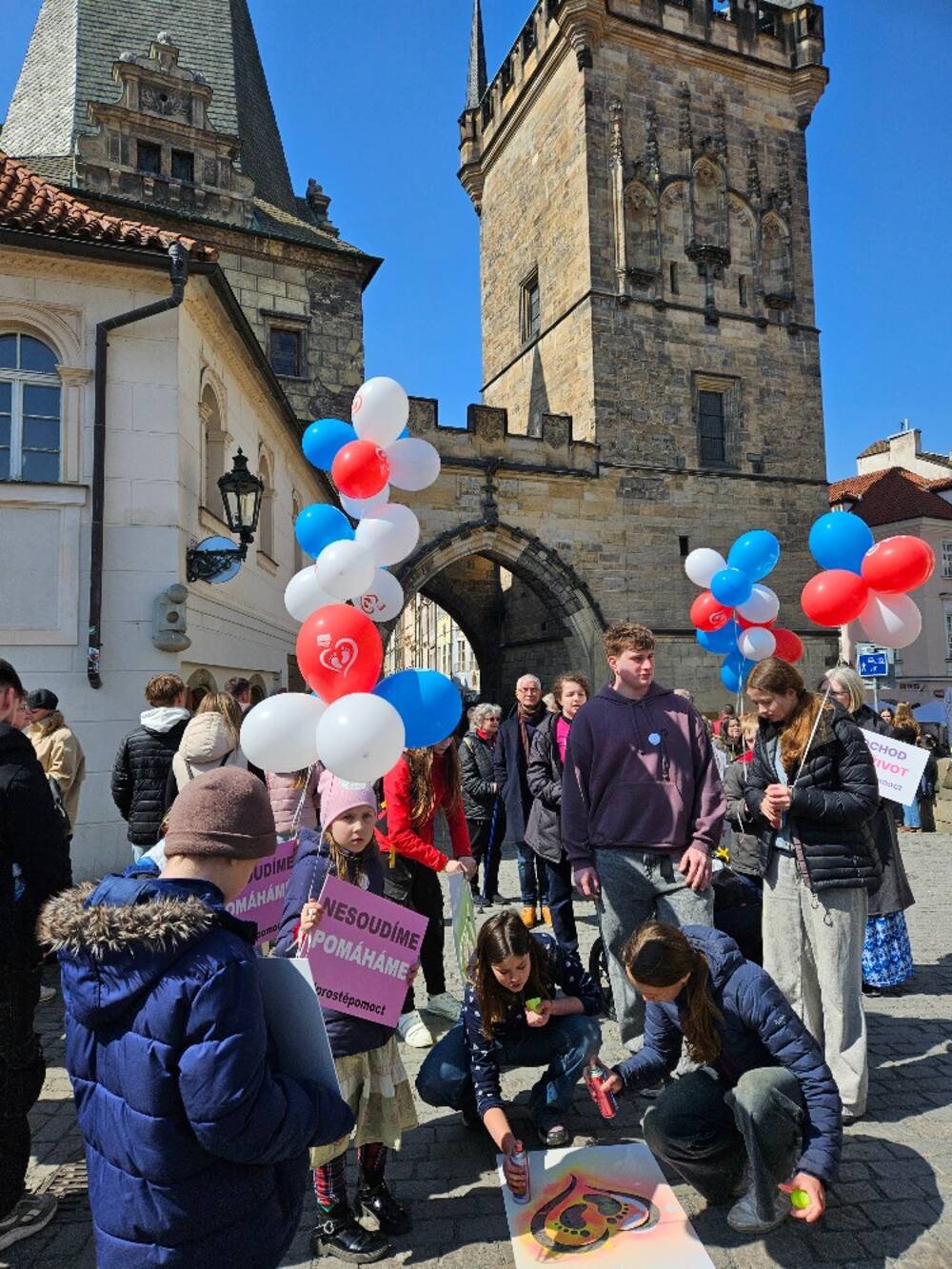
“The leadership of local police disabled a public gathering for which the public has a right,” the organizer said. The group stressed that the march is held to show support for women facing unexpected pregnancies, adding: “We welcome among us even those with another viewpoint.”
However, those responsible lacked the “political will” to secure the march by blocking the square, while letting “the radicals run wild and intimidate the participants,” the organizer said.
The press office of the Police of the Czech Republic wrote to EWTN News that it has “no information suggesting that the police officers acted improperly in any way.” The Regional Directorate of Police in Prague did not respond to an enquiry for comment.