


U.S. officials are continuing to defend ongoing military actions in the Middle East amid criticism from top Catholic leaders around the world and after media reports that the Pentagon demanded the Vatican throw its support behind its ongoing military maneuvers.
Vatican Secretary of State Cardinal Pietro Parolin this week stressed the need for “more voices of peace, more voices against the madness of the rush toward rearmament” after several weeks of U.S.-led strikes against Iran have reportedly resulted in thousands of casualties and have raised the specter of a sustained global war.
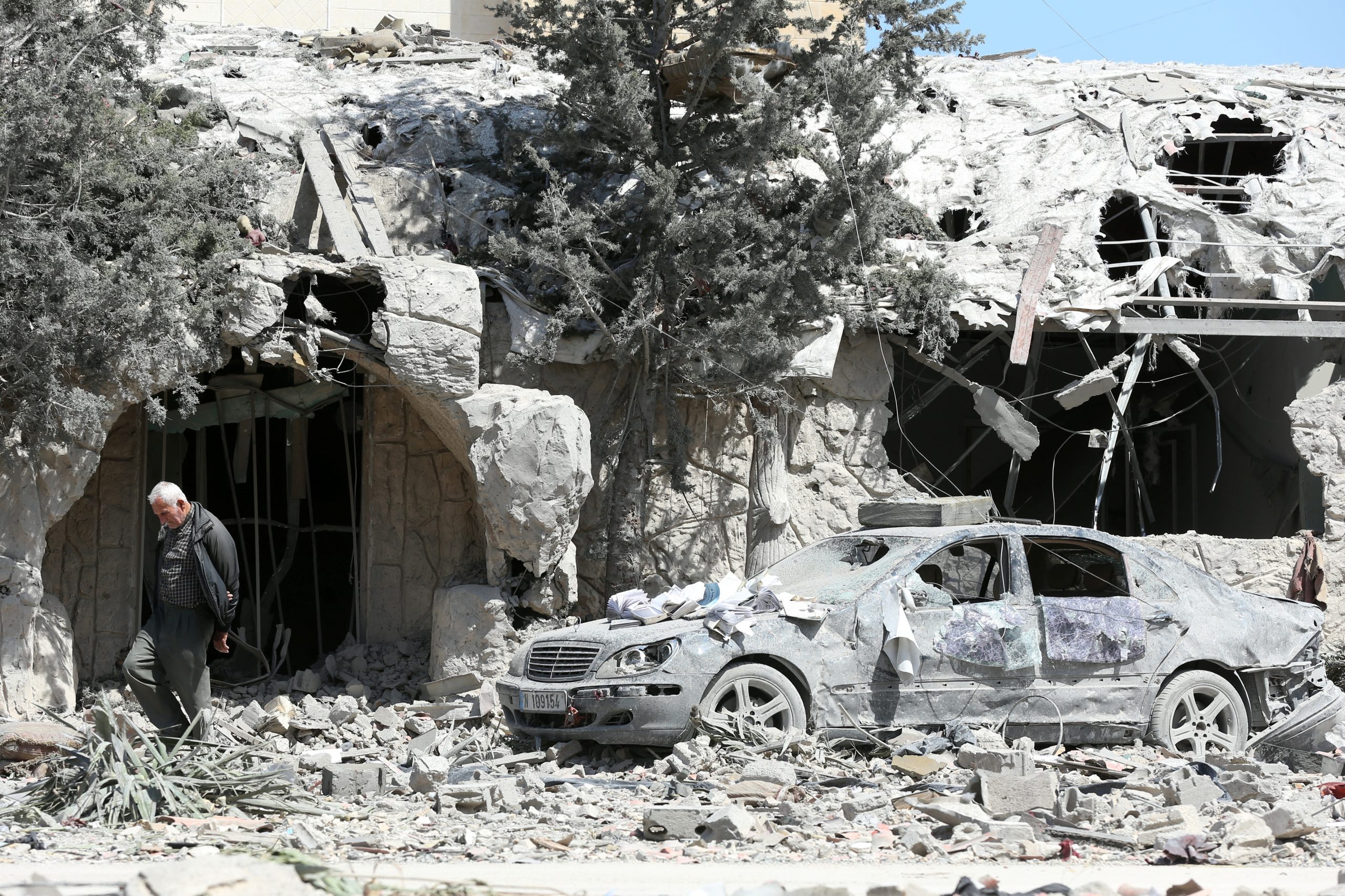
The two countries agreed to a temporary ceasefire on April 7 while negotiations play out, but the agreement has been marred by subsequent Israeli strikes in Lebanon as well as disputes over Iranʼs reopening of the Strait of Hormuz, a critical global shipping route whose closure upended global markets and sent oil prices skyward.
Before the ceasefire, U.S. President Donald Trump had threatened the annihilation of the “whole civilization” of Iran if the country failed to accept U.S. terms — a vow that drew an explicit rebuke from Pope Leo XIV.
“Attacks on civilian infrastructure [are] against international law [and are] also a sign of the hatred, the division, the destruction that the human being is capable of,” the pope said after Trumpʼs threat. “We all want to work for peace. People want peace.”
“I would invite citizens of all the countries involved to contact the authorities, political leaders, congressmen, to ask them, tell them to work for peace and to reject war,” the Holy Father said.
U.S. Conference of Catholic Bishops President Archbishop Paul Coakley also condemned the threat, arguing on April 7 that such rhetoric “cannot be morally justified.”
Coakley at the time “call[ed] on President Trump to step back from the precipice of war and negotiate a just settlement for the sake of peace and before more lives are lost.”
‘A victory for the United States of America’
Amid rebukes from Catholic leaders around the world, U.S. leadership has celebrated both the military action and the ceasefire that came after Trumpʼs apparent willingness to destroy Iran, a threat that critics said pointed to the potential deaths of millions of civilians.
In a release on April 8 after the ceasefire was announced, Secretary of Defense Pete Hegseth called the ongoing actions in Iran a “decisive military victory.”
“President Trump forged this moment,” Hegseth said. “Iran begged for this ceasefire — and we all know it.”
The terms of the ceasefire are themselves in dispute, leaving open the question of whether military action will resume before the two-week window expires.
Iran has argued that the Israeli strikes in Lebanon violated the agreement. The U.S. government, meanwhile, said Iran agreed to reopen the critical Hormuz Strait amid ongoing peace negotiations, but United Arab Emirates industry minister Sultan Al Jaber said on April 9 that the strait has not been fully reopened.
Still, U.S. officials have continued to boast of the success of the mission. Chairman of the Joint Chiefs of Staff General Dan Caine said on April 8 that coalition forces “achieved the military objectives” they set out to accomplish in Iran, including the destruction of much of Iranʼs military forces.
White House Press Secretary Karoline Leavitt similarly called the campaign “a victory for the United States of America,” one that “the president and our incredible military made happen.”
The putative victories after sharp criticism from Catholic leadership come as tensions between the U.S. and the Vatican appear to be strained.
On April 6 the Free Press reported that the government in January summoned then-Apostolic Nuncio Cardinal Christophe Pierre to the Pentagon, allegedly delivering to the diplomat a “bitter lecture” demanding that the Holy See “take [the United States’] side” in global military conflicts.
An official with the Department of Defense told EWTN News in a statement on April 9 that the Free Press report was “highly exaggerated and distorted.”
“The meeting between Pentagon and Vatican officials was a respectful and reasonable discussion,” the statement said. “We have nothing but the highest regard and welcome continued dialogue with the Holy See.”
The apostolic nunciature in the United States of America on April 9 also confirmed the meeting, saying in a statement that Pierre visited the Pentagon on Jan. 22 and that the cardinal “discussed current affairs” with U.S. officials.
“Meetings with government officials are a standard practice for the nuncio, who serves as the Holy See’s ambassador to the United States,” the nunciature said. “The apostolic nunciature is grateful for the opportunities to meet and dialogue with government officials and others in Washington to discuss areas of mutual concern.”
Vice President JD Vance, himself a Catholic, was asked about the report on April 8 while in Hungary. He told media he would “like to talk to Cardinal Christophe Pierre and, frankly, to our people, to figure out what actually happened.”
“I think itʼs always a bad idea to offer an opinion on stories that are unconfirmed and uncorroborated, so Iʼm not going to do that,” the vice president said at the time.
Pierre retired in March; Pope Leo XIV subsequently appointed Archbishop Gabriele Giordano Caccia to replace him. Caccia has thus far been silent about the Iran conflict, though in the recent past he has been an open critic of war and an outspoken proponent of peace.
Shortly after the outbreak of the Israel-Hamas war, he told the United Nations Security Council in October 2023 that war “is always a defeat,” and he lamented the “lasting end to the cycle of violence that has engulfed” the Holy Land.
U.S. leaders have justified the Iranian conflict by alleging that the Middle Eastern country represents a threat to the U.S. and to global peace. Ahead of the ceasefire, Secretary of State Marco Rubio argued that Iran was “violating every law known” by allegedly striking commercial vessels in the Strait of Hormuz.
He described the country as “a regime that doesnʼt believe in laws or rules or anything like that.”
Parolin, meanwhile, this week called for “more voices raised in favor of our poorest brothers and sisters” and urged the Catholic world — including Catholic universities — to seek out “new economic models inspired by justice.”
“I am struck by how much determination … with which the military option is presented as decisive, almost inevitable,” the cardinal said.